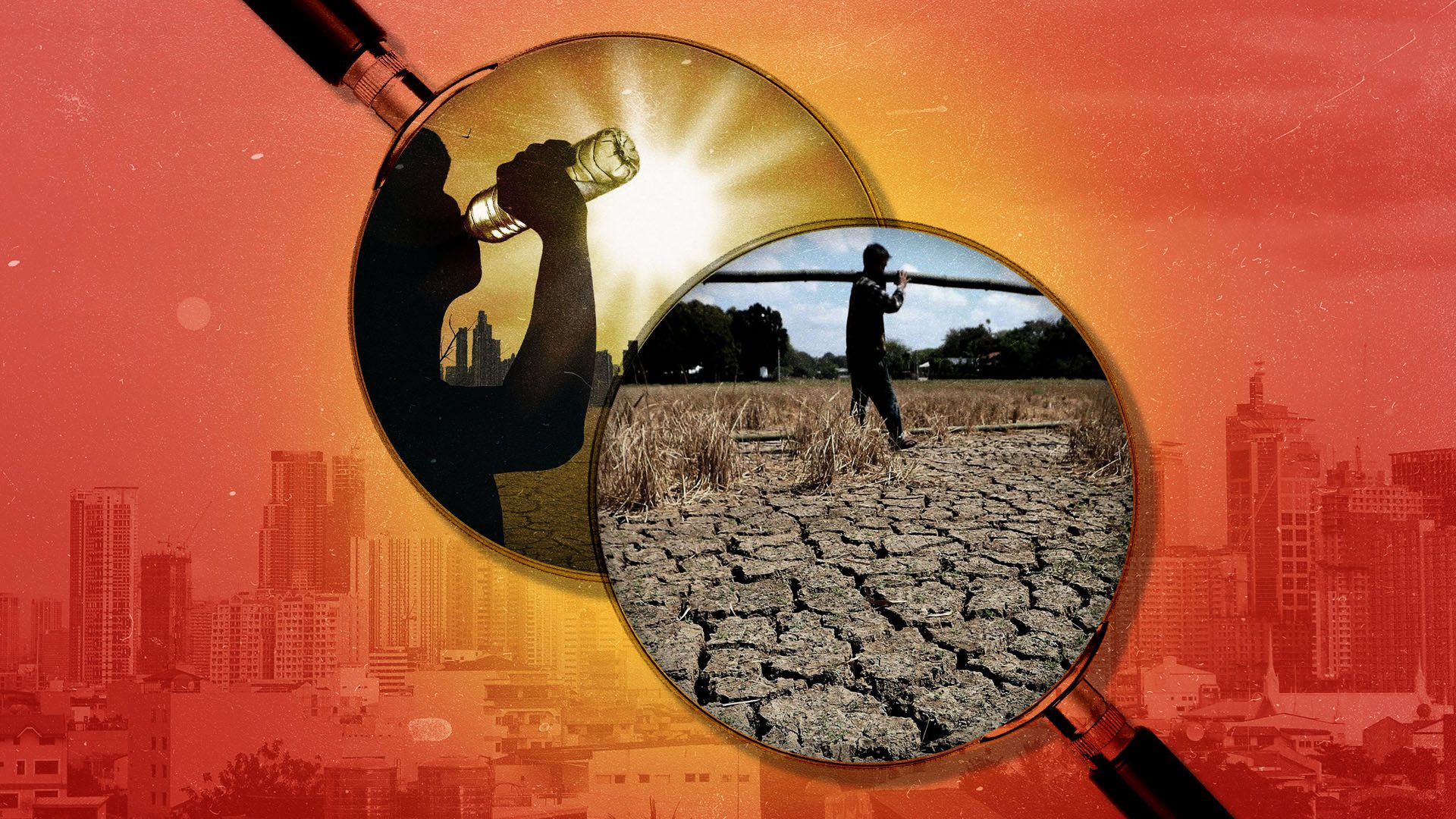
FAST FACTS: What is a Super El Niño, and what should we expect from it?
Résumé détaillé
This Super El Niño is expected to bring prolonged dry spells, drought, and water shortages until April 2027
This is AI-generated. Read the article for full context. Report any errors.
On November 5, the Philippine Atmospheric, Geophysical and Astronomical Services Administration (PAGASA) declared that a very strong El Niño was currently active in the tropical Pacific predicted to peak at the end of 2026 and persist until the first half of 2027.
Because of its intensity, foreign news outlets began referring to it as a “Godzilla El Niño” — referencing the giant mythical creature — or a Super El Niño.
Confused by terms used by government agencies, or curious about the difference between Super El Niño and a regular El Niño? Here are facts you need to know about this complex phenomenon.
El Niño is a climate event that happens when the Pacific Ocean’s surface temperature is warmer than normal.
This phenomenon occurs as the trade winds across the Pacific weaken or sometimes reverse. These winds typically travel from east to west along the equator, carrying warm surface waters away from South America and toward Southeast Asia.
Because warmer ocean temperatures bring more rainfall, their absence in Southeast Asia during an El Niño brings cooler-than-normal sea surface temperatures and an unusually dry climate.
El Niño is one extreme phase of the El Niño Southern Oscillation (ENSO), a recurring global climate pattern driven by the Pacific Ocean’s temperature shifts. In contrast, La Niña is its cold phase, marked by colder-than-average sea surface temperatures.
Fishers off the coast of Peru first noticed periods of unusually warm water that come around Christmas time, hence calling them El Niño, meaning “little boy” in Spanish, or “Christ child” when capitalized. Afterwards, they named its contrasting phenomenon La Niña, meaning “little girl.”
Début de l'article, extrait de Rappler. Pour lire la suite, ouvrez l'article chez le média.
MarketNews présente le titre et le résumé publiés par le média. L'article complet se lit sur le site de l'éditeur. (www.rappler.com)