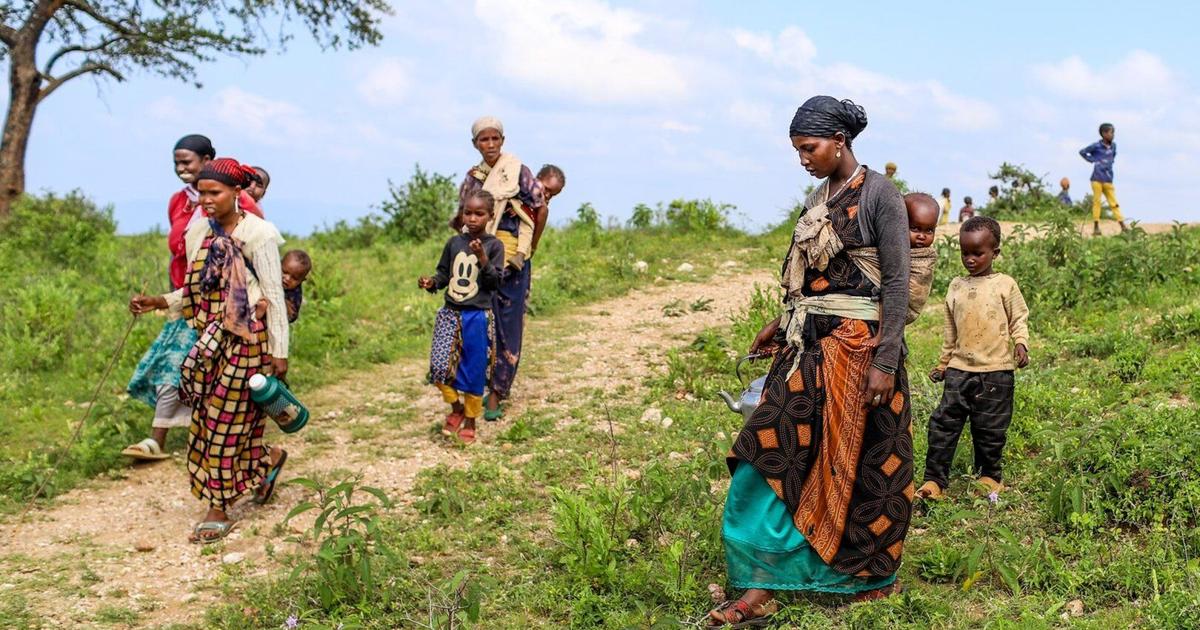
For Ethiopian mothers sheltering in Kenya, safety brings a struggle to feed their children
Résumé détaillé
Ethiopian mothers who fled fighting into Kenya have found safety but are struggling to feed their children, relying on communal meals and sleeping on floors as ...
MOYALE, Kenya (AP) — Ethiopian mothers who fled fighting into Kenya have found safety but are struggling to feed their children, relying on communal meals and sleeping on floors as more families cross the border seeking help.
The families are fleeing fighting between Somali and Oromo communities in southern Ethiopia. The violence stems from a longstanding territorial dispute between Ethiopia’s Oromia and Somali regional administrations and has driven tens of thousands of people across the border into Kenya.
“We came here on foot late in the night, running for our lives, and arrived with very little,” said Shukria Dalacha, 26, whose daughter, Sijra Bonaiyo, was five days old when they crossed the border. “We do not have the means to sustain our families.”
For Dalacha, reaching safety has meant sleeping on the floor and relying on rice and beans provided to families awaiting registration. She said she was struggling to produce enough breast milk and worried about feeding her newborn.
The border violence adds to Ethiopia’s wider instability, including renewed fighting in Tigray and an insurgency in Amhara. Seven opposition groups formed an alliance in September seeking to remove Prime Minister Abiy Ahmed’s government.
The 2020-2022 war in northern Tigray caused about 500,000 civilian deaths from violence, famine and the collapse of health services, according to researchers at Ghent University in Belgium.
Conflict has also left communities less able to withstand drought. A September assessment by regional and federal disaster authorities and humanitarian partners estimated that 3.9 million people in Tigray would need emergency food assistance through December. It said displacement, restricted access to farmland and disrupted livelihoods were compounding the impact of poor rains.
Families continued arriving during a visit to Moyale by The Associated Press. Hundreds crowded registration areas at reception points, waiting to be counted and gain access to household rations and…
Ker…
Début de l'article, extrait de Toronto Star. Pour lire la suite, ouvrez l'article chez le média.
MarketNews présente le titre et le résumé publiés par le média. L'article complet se lit sur le site de l'éditeur. (www.thestar.com)