Evidence of deepest explosive volcanic eruption found in Mariana trench
Résumé détaillé
The researchers sailed to the Mariana Trench, among the deepest oceanic valleys on the planet, to deploy a remotely operated vehicle, or ROV, called Jason/Medea | World News
An international team of marine geologists using a remotely operated submarine in an abyss in the western Pacific Ocean has found evidence of the deepest-known explosive volcanic eruption on Earth as much as 4 miles (6,500 meters) below the surface.
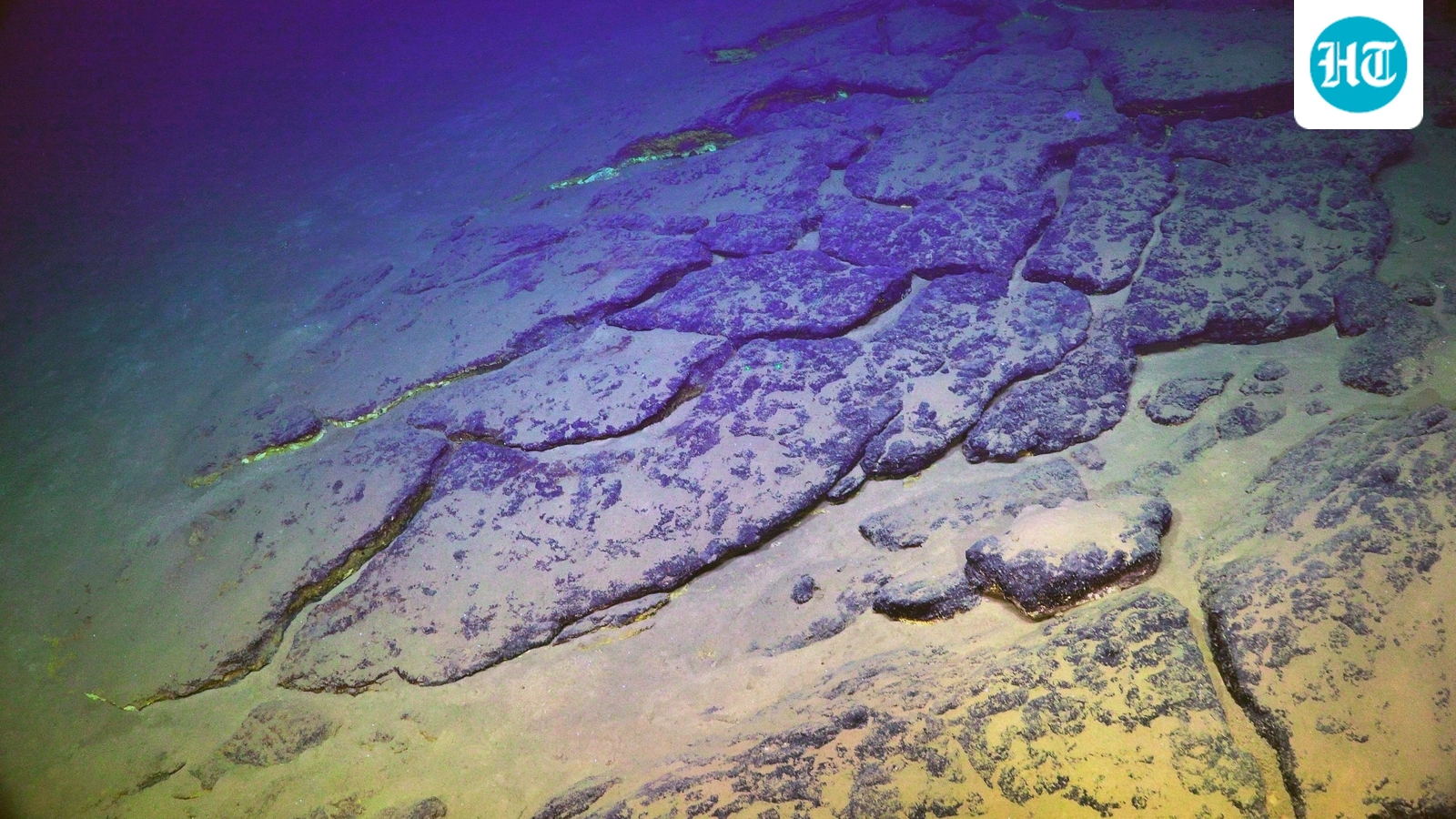
The researchers sailed to the Mariana Trench, among the deepest oceanic valleys on the planet, to deploy a remotely operated vehicle, or ROV, called Jason/Medea. They used the ROV to study the trench walls around the deepest-known point of seabed on Earth, called the Challenger Deep.
The ROV observed and collected pyroclastic rocks, telltale evidence of an explosive volcanic eruption composed of ejected rock fragments and volcanic glass.
"The key findings are the discovery of recent igneous activity near the trench," said geologist Robert Stern, a professor emeritus at the University of Texas at Dallas and a visiting researcher at UCLA who is the lead author of a study describing the findings in the journal Frontiers in Earth Science.
"Pyroclastic rocks are well known from volcanic eruptions on land and even in the shallow ocean, but they aren't known from as deep as we discovered them," Stern said.
The Mariana Trench formed as part of a process called plate tectonics involving the inexorable movement of continent-scale plates on Earth's surface. The trench is the surface manifestation of a subduction zone, the boundary where one plate dives beneath another plate.
The surface above the subduction zone typically has big volcanoes, but these are generally located about 125 to 185 miles (200 to 300 km) from the trench. The pyroclastic rocks that the researchers discovered were in the trench itself.
The ROV explored along 340 miles (550 km) of a geological structure called a forearc that is part of the upper plate between the trench and a line of volcanoes on the seafloor, near the Challenger Deep.
"The ROV was our principal research tool used for looking at and collecting samples from the seafloor down to 6,500 meters (4 miles),"…
Début de l'article, extrait de Hindustan Times. Pour lire la suite, ouvrez l'article chez le média.
MarketNews présente le titre et le résumé publiés par le média. L'article complet se lit sur le site de l'éditeur. (www.hindustantimes.com)