Sidra Medicine contributes to international AI study advancing neonatal care
Detailed summary
Sidra Medicine, a member of Qatar Foundation, has contributed to a major international study demonstrating how artificial intelligence ...
Doha, Qatar: Sidra Medicine, a member of Qatar Foundation, has contributed to a major international study demonstrating how artificial intelligence (AI) models originally developed for adult patients can be adapted to support neonatal care.
Published in the high-impact journal, Nature Biomedical Engineering, the research highlights a promising approach to improving the accuracy of AI-assisted medical imaging for newborns.
Titled ‘Repurposing Adult AI Radiograph Models for Neonatal Care Through Continual Learning: An International Multicenter Study,’ the study featured input from 30 neonatal intensive care units across 20 countries and territories. Conducted through the Medical AI Data for All (MAIDA) initiative at Harvard Medical School, the research examined how existing AI models could be adapted to meet the specific needs of newborn patients while protecting patient data privacy.
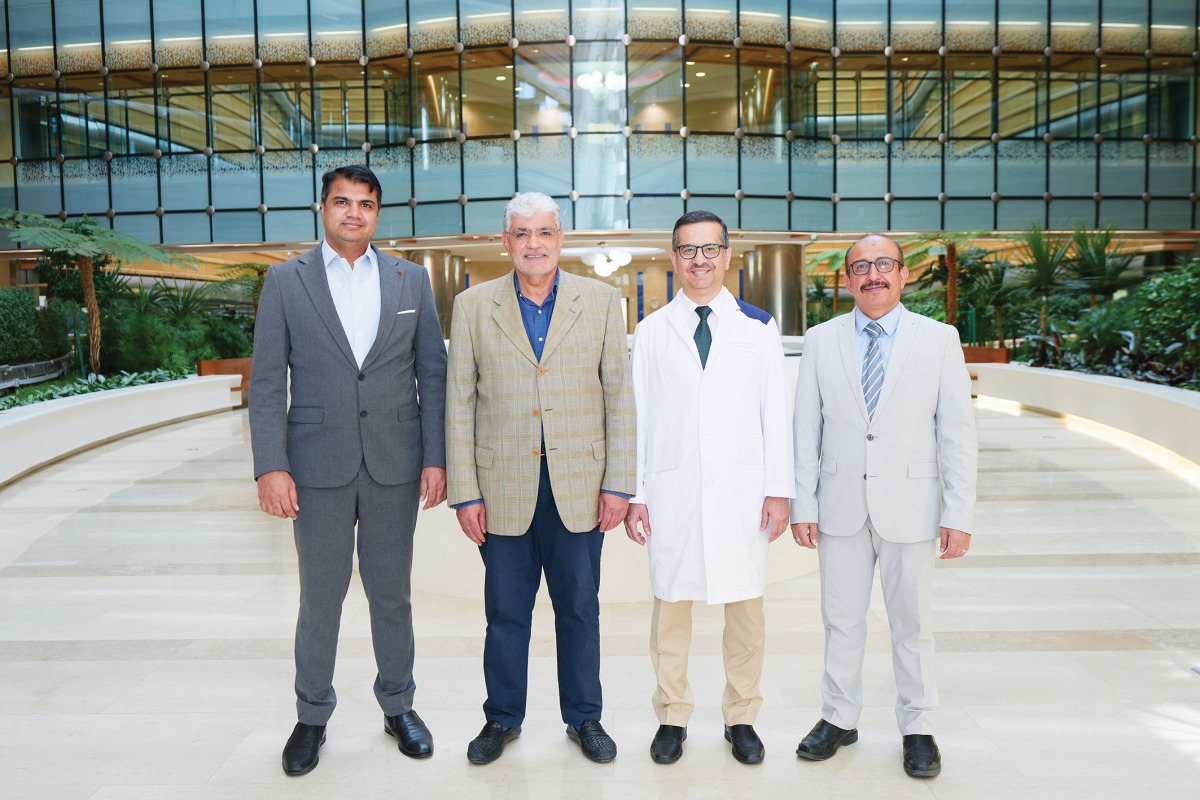
From Sidra Medicine, the project was led by Senior Attending Physician and Director of the Paediatric Neurosurgery Fellowship programme Dr. Khalid Al-Kharazi, and Manager of Imaging Information Systems, Zafar Iqbal with additional support from the Chair of Radiology, Dr. Abdusamea Shabani. Department Head of Healthcare Management at the University of Doha for Science and Technology Prof. Khaled Al-Surimi, played a key role in facilitating the partnership between Sidra Medicine and the MAIDA team at Harvard Medical School.
Dr. Khalid Al-Kharazi, co-author of the study, said, “Artificial intelligence has tremendous potential to support clinical decision-making, but its effectiveness depends on how well it performs across different patient populations. Newborns have unique anatomical and clinical needs that cannot always be addressed by technologies developed for adults. This study demonstrates how existing AI models can be adapted to better support neonatal care, potentially helping clinicians assess medical images more accurately and identify issues that require timely attention.”
The…
Each…
Opening of the article, excerpted from The Peninsula. To read the rest, open the article on the publisher's site.
MarketNews shows the headline and summary published by the outlet. The full article is on the publisher's website. (thepeninsulaqatar.com)