What The Oregon Trail & Kerbal Space Program teach about failure
详细摘要
MANILA, Philippines — A player in The Oregon Trail faces a high-stakes choice at a swollen river: ford the water, pay for a ferry, or risk losing supplies. Miles away from…
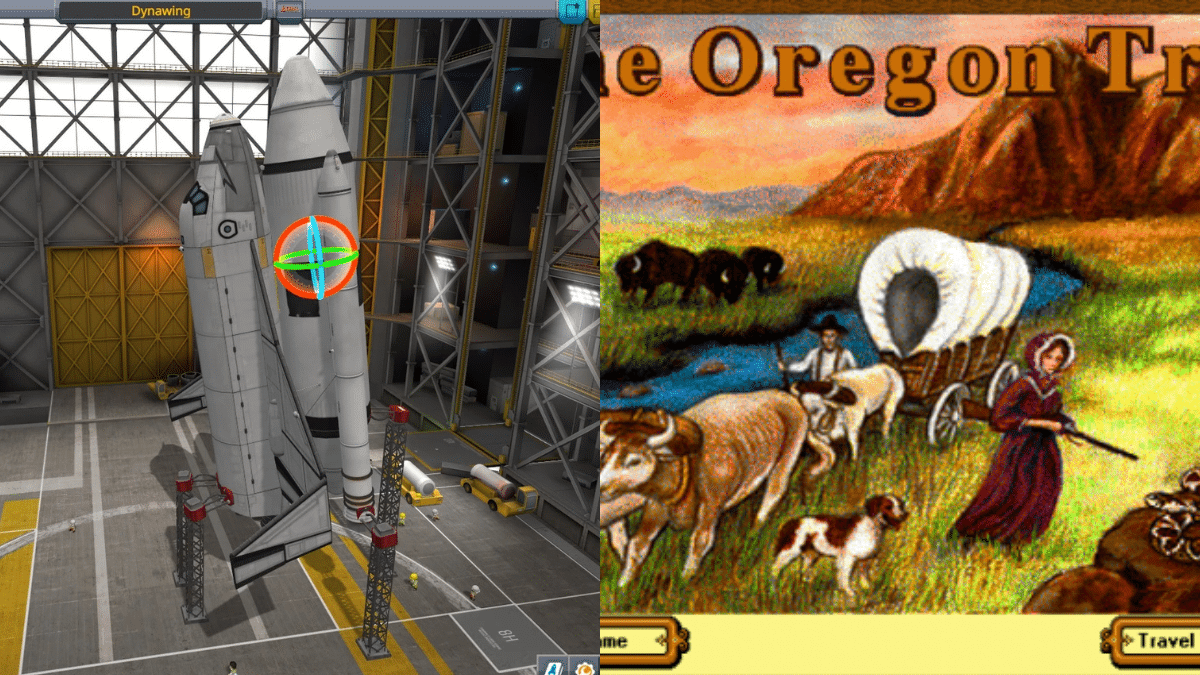
MANILA, Philippines — A player in The Oregon Trail faces a high-stakes choice at a swollen river: ford the water, pay for a ferry, or risk losing supplies. Miles away from 19th-century pioneers, Kerbal Space Program presents a similar dilemma, as a player watches their carefully built rocket tip sideways and disintegrate on launch
These failures stem from simple miscalculations, a risky river crossing or a flawed launch design. Yet a mistake is rarely just a “game over.” It is feedback: players see what failed, adjust their approach, and try again.
Can failing in a video game teach us how to handle setbacks in real life?
Games turn decisions into experiences. Instead of only reading about a problem, players must respond to it: make a choice, see the result, and adjust their approach.
The Oregon Trail and Kerbal Space Program offer two clear ways to see that process. One turns limited supplies and uncertain conditions into difficult choices; the other turns a failed rocket launch into a design problem to solve.
Research suggests this cycle can support learning. In a study of 88 middle-school students playing Virulent, an educational game about virology, researchers found that students who failed more often before succeeding at a level showed greater learning gains. Failure also prompted students to discuss the game’s content and mechanics with classmates.
This helps explain why games have found a place in education. Some use gamification, adding points, badges, and rewards to non-game activities, while others use game-based learning, where the game’s rules, challenges, and decisions become the learning environment itself.
A streak may encourage someone to practise a language every day, but keeping the streak does not necessarily mean they understand the language. In a game built around problem-solving, players need to understand why a strategy works or fails.
Still, participation is not the same as understanding. Players can repeat a winning strategy without knowing why it…
文章开头,摘自Philippine Daily Inquirer。如需阅读全文,请前往媒体网站。
MarketNews 仅展示媒体发布的标题和摘要,全文请在出版方网站阅读。 (technology.inquirer.net)