Why the US military struggles to heed warnings from the past
Résumé détaillé
U.S. planes were removed from airbases in England after security incidents. It's highlighted a potential blind spot for the military.
U.S. planes were removed from airbases in England after security incidents. It's highlighted a potential blind spot for the military.
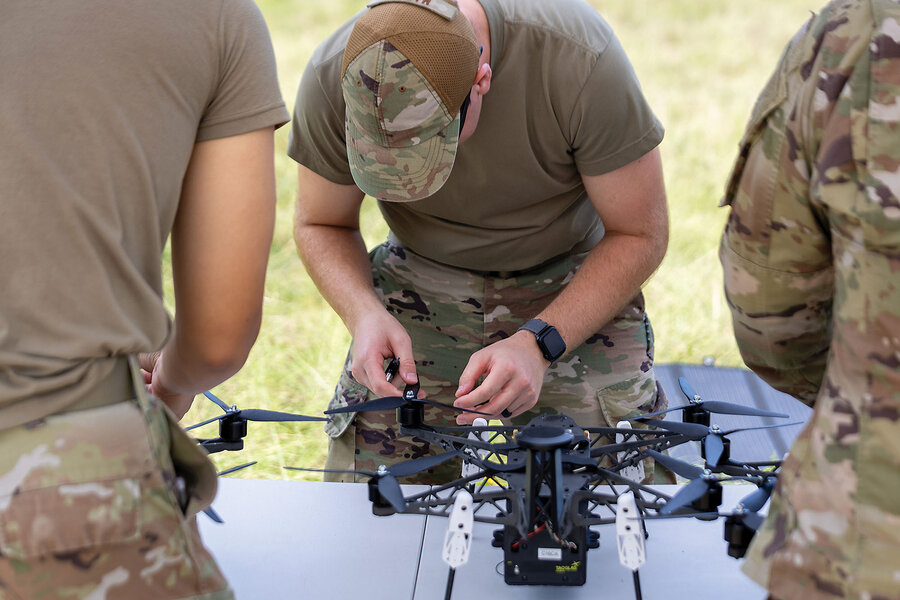
The hasty departure of a quarter of America’s B-1 bomber fleet from Fairford, England, in October, amid fears of an Iranian drone attack highlighted what analysts say is a long-standing blind spot for the military: the disruptive powers of new tactics and technology.
It was during World War II that Britain used an aircraft carrier to launch what were, even back then, relatively old-fashioned biplanes. They dropped torpedoes rigged to strike naval forces in a shallow port that Italy thought was well protected, knocking out half of Italy’s battleships in a single night.
Japanese military planners took note of the Taranto raid. They launched a similar attack on Pearl Harbor one year later.
The U.S. and its Western allies are increasingly facing hybrid warfare tactics, such as sabotage, disinformation, and cyber attacks. But some analysts think U.S. military planners haven't learned enough from recent and much older incidents, and need to do more to adapt.
History is full of such cautionary tales. U.S. military planners, at times overconfident, have failed to adequately learn from them, some analysts say. The incident at Fairford, where the United States feared drones launched from nearby vans, for example, has been compared to a Ukrainian strike against Russian long-range bombers last year.
But as Iran and Russia increasingly target the West through “hybrid attacks” that make use of surveillance, sabotage, disinformation, and cyber incursions to wage “shadow wars,” the Pentagon is taking note. In early November, a dozen U.S. refueling aircraft were moved out of another Royal Air Force base, this time in Mildenhall, England, reportedly due to more Iranian threats.
“When war comes, things move far more quickly than in peacetime,” says Steve Feldstein, senior fellow at the Carnegie Endowment for International Peace.
An Atlantic Council think tank…
Début de l'article, extrait de The Christian Science Monitor. Pour lire la suite, ouvrez l'article chez le média.
MarketNews présente le titre et le résumé publiés par le média. L'article complet se lit sur le site de l'éditeur. (www.csmonitor.com)