GCC To Set Up Kuwait Command Center Amid Doubts Over US Security Commitment
Résumé détaillé
GCC To Set Up Kuwait Command Center Amid Doubts Over US Security Commitment Via Middle East EyeThe Gulf Cooperation Council (GCC) has approved a new joint forward-command center…
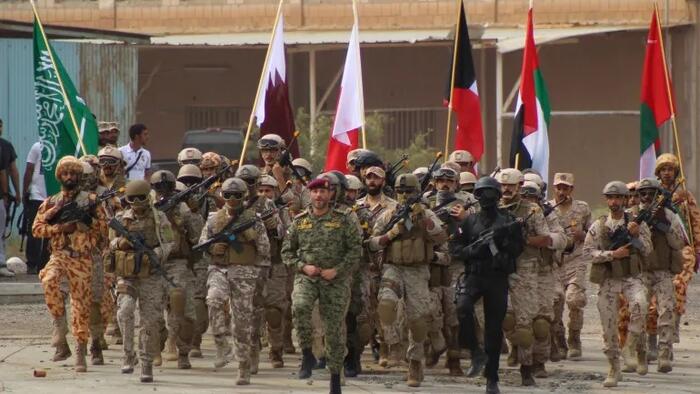
The Gulf Cooperation Council (GCC) has approved a new joint forward-command center to deepen military integration among members, as doubts rise about the US's commitment to regional security amid the war on Iran.
The command center will be built in Kuwait, a Gulf state that endured thousands of missile and drone strikes from Iran and Iraqi militias aligned with Tehran. GCC secretary general Jasem al-Budaiwi said in a statement on Tuesday that the deployment of "appropriate" forces to the center would take place, but did not provide additional details.
The GCC body representing six Gulf states established a joint defense agreement in 2000, stating that an attack on one member is an attack on all. The GCC’s commitment to self-defense, however, is not as ironclad as that of the Nato military alliance.
The move could be seen as an effort to address the GCC's lack of a joint military command structure. The organization has failed to respond to attacks on members from several fronts.
The GCC did not respond when Israel attacked Hamas negotiators in Doha, Qatar, in September 2025. The organisation has also failed to respond to devastating Houthi missile and drone attacks on Saudi Arabia.
The decision to base the command center in Kuwait may also raise questions about its practical viability. Kuwait’s geography at the hook of the Gulf made it especially vulnerable to missile and drone attacks from both Iran and Iraqi militias during the war.
Kuwait hosted around 14,000 US troops before the war, more than any other country in the Middle East. It is home to two large bases - Camp Arifjan and Ali al-Salem Air Base - both of which came under intense attack from Iran.
It's unclear how the GCC could defend a command centre when the US could not defend its bases.
Gulf states have turned to external partners for security. Saudi Arabia has activated the Mecca Pact with Pakistan and Turkey amid Houthi attacks.
Début de l'article, extrait de ZeroHedge. Pour lire la suite, ouvrez l'article chez le média.
MarketNews présente le titre et le résumé publiés par le média. L'article complet se lit sur le site de l'éditeur. (www.zerohedge.com)