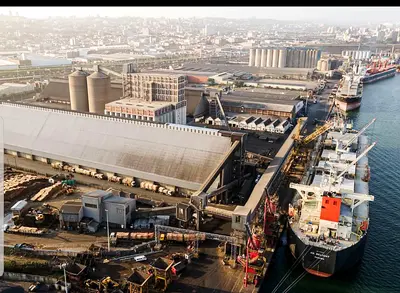
National recovery plan docks in Durban
Detailed summary
Logistics now costs South Africa 14.6% of GDP. Transport Minister Barbara Creecy explains how real-time interventions, new equipment, and strict…
South Africans feel the cost of a broken logistics system long before they ever see a port.
They feel it when a factory cannot get parts. When a farmer loses an export order because a ship sailed late. When a small business waits weeks for components. When medicine is stuck at sea. When food and goods cost more because moving them costs more.
That is the quiet, daily tax of inefficiency. And it is getting heavier.
Logistics now costs South Africa 14.6% of GDP, its highest share since 2003.
Let us be frank about what that means: we are paying more to move less, more slowly, and less predictably than our competitors. No serious trading nation can build prosperity on that foundation.
This is why logistics reform is not a technical project tucked away in Transnet. It is an economic survival project. It is about whether South Africa can trade, produce, export, and create jobs in a world that does not wait for us.
Reform has a clear purpose: strong public authorities for roads, rail, and ports, and capable operators competing and investing on shared infrastructure. Public control of the strategic asset. Private discipline in the operation. Accountability for performance.
But let us be equally frank: reform will not be judged by structures, agreements or announcements.
It will be judged by what a freight customer experiences on a Tuesday morning. Does the ship berth on time?
Opening of the article, excerpted from Mail & Guardian. To read the rest, open the article on the publisher's site.
MarketNews shows the headline and summary published by the outlet. The full article is on the publisher's website. (mg.co.za)