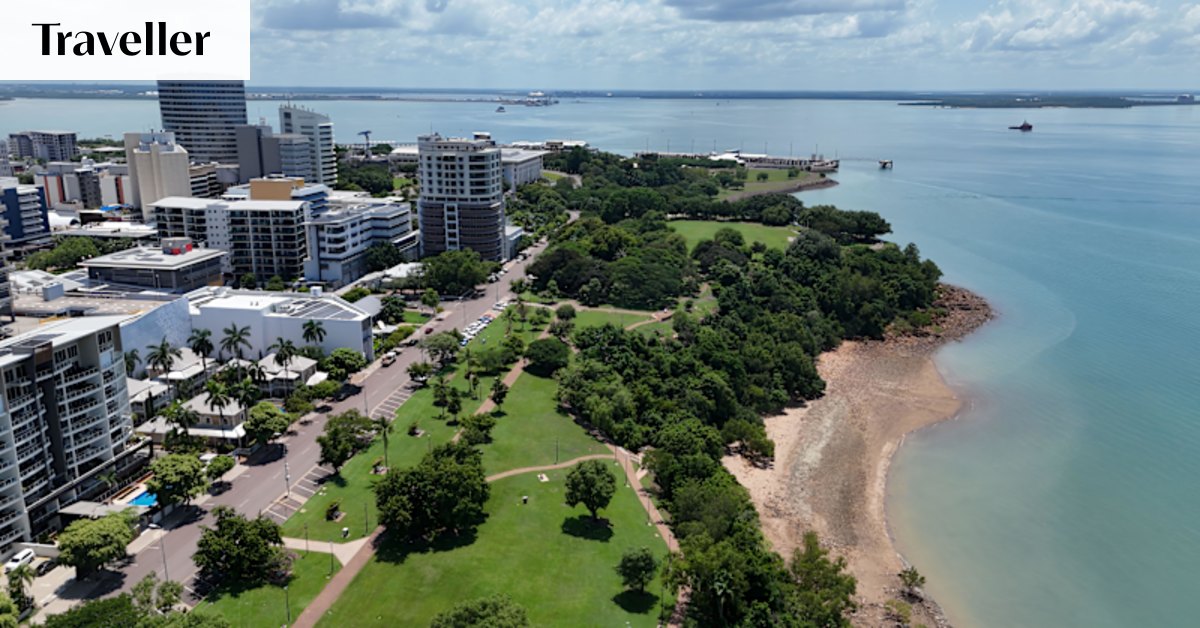
Darwin’s waterfront park is more than a green space, it’s a trip through time
详细摘要
Modestly presented attractions sometimes relate astonishing human stories if only we seek them out.
The obvious and glamorous in travel can distract us with razzle-dazzle. Yet modestly presented attractions sometimes relate astonishing human stories if only we seek them out, as I discover on my fourth visit to Darwin.
The city has several museums that address its bombing in 1942, complete with salvaged planes, talking holograms and virtual-reality recreations. The Bombing of Darwin exhibition is excellent.
This time, however, I discover Bicentennial Park, and realise that old-fashioned sightseeing is sometimes best. No virtual reality or swelling music to sidetrack me. I stand and read signboards as blossoms twirl from trees, and soon become absorbed.
Between Darwin’s Indigenous art, Crocosaurus Cove and Mindil Beach Sunset Market, I’m glad I’ve taken a walk in the park. This larrikin city tells various great Australian stories, but none are more compelling than the one recounted on its modest signboards.
They provide a detailed account of Darwin’s bombing by Japanese forces on February 19, 1942, but in ways I haven’t heard before. What first strikes me is their considered criticism of Australia’s political and military decision-making.
Darwin was built up as a WWII military base and its population swelled, but it had negligible defences. Some 2000 women and children were evacuated after the bombing of Pearl Harbour 10 weeks earlier, but many civilians in vital roles remained.
Despite all the warning signs, 47 ships lay unprotected in the harbour. The destroyer USS Peary anchored in the harbour. The approach of Japanese bombers and attack aircraft went unnoticed.
As the signboards tell me, anti-aircraft gunner Wilbert Hudson was in the shower and ran to his post wrapped in a towel as the first bombs fell. On the wharf, 21 workers on a casual smoko were killed by a bomb.
Bicentennial Park shows that war is no abstraction but a lived experience. Other signboards recount the thoughts of an army nurse, a Chinese-Australian businessman, and Tiwi Islander who took a…
文章开头,摘自WAtoday。如需阅读全文,请前往媒体网站。
MarketNews 仅展示媒体发布的标题和摘要,全文请在出版方网站阅读。 (www.watoday.com.au)