What's Trump's strategy now with Iran? To keep things as they are
Detailed summary
President Trump says the "status quo" is what Gulf Arab allies want as the Iran war hits a stalemate and the U.S. midterms force a pivot from threats of attacks to economic pressure.
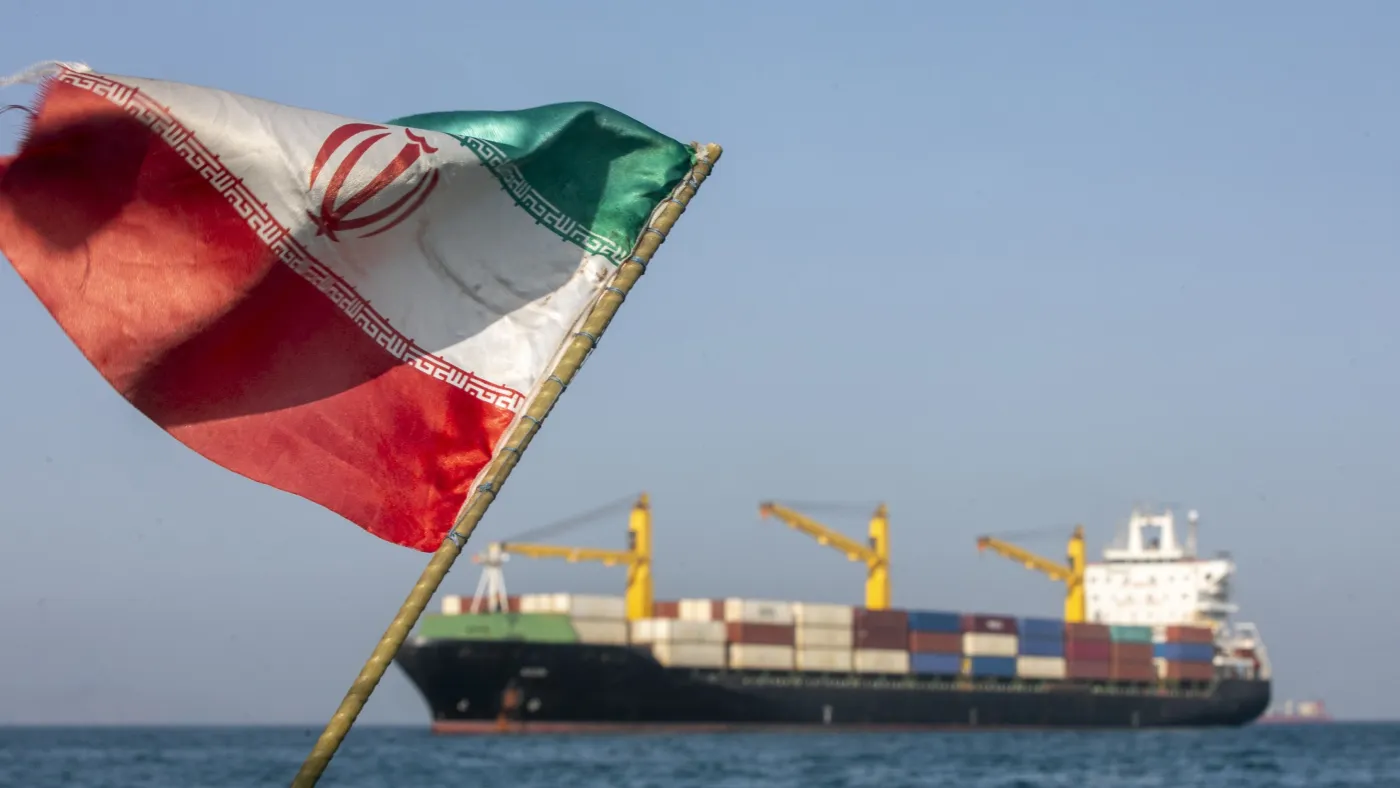
An Iranian flag flutters in the wind as ships remain anchored on in the Strait of Hormuz. Majid Saeedi/Getty Images hide caption
DUBAI, United Arab Emirates — President Trump is confronting new realities nine months into the war with Iran that leave him with dwindling options to ending the conflict.
On Thursday, he waved away the need for a deal with Iran, saying the U.S. has billions of Iran's dollars frozen in overseas accounts.
"We don't need a deal with Iran. Those days have long since passed. We've got their money," he wrote in a Truth Social post.
Negotiations with Iran are stuck with mediator Qatar working to bridge the divide. Trump met Qatar's prime minister at the White House this week, and said afterward that Gulf Arab allies prefer "the status quo" of continued economic pressure on Iran. He wrote that while the U.S. remains "locked and loaded," an attack at this point "seems to be quite unlikely."
That's a pivot from his threats to carry out quick, intense strikes on Iran in the days before he had to contend with two election setbacks.
Trump's wartime ally, Israeli Prime Minister Benjamin Netanyahu, whom he'd thrown his support behind, is on the cusp of being ousted from power after elections there.
Meanwhile, at home, Trump's party lost its majority in Congress in midterm elections. Vice President Vance blamed Republican losses on the unpopular war with Iran and the nature of U.S. relations with Israel.
With less room to room maneuver and Iran still defiant, Trump's strategy appears to be to keep things as they are, for now. That means the possibility of escalation still looms.
Opening of the article, excerpted from NPR. To read the rest, open the article on the publisher's site.
MarketNews shows the headline and summary published by the outlet. The full article is on the publisher's website. (www.npr.org)