What to Know About The Supermoon Appearing This Thanksgiving Week
Detailed summary
A supermoon is like any other full moon, only more so. A full moon occurs when the Earth sits between the sun and the moon, allowing solar light to bathe the entirety of the…
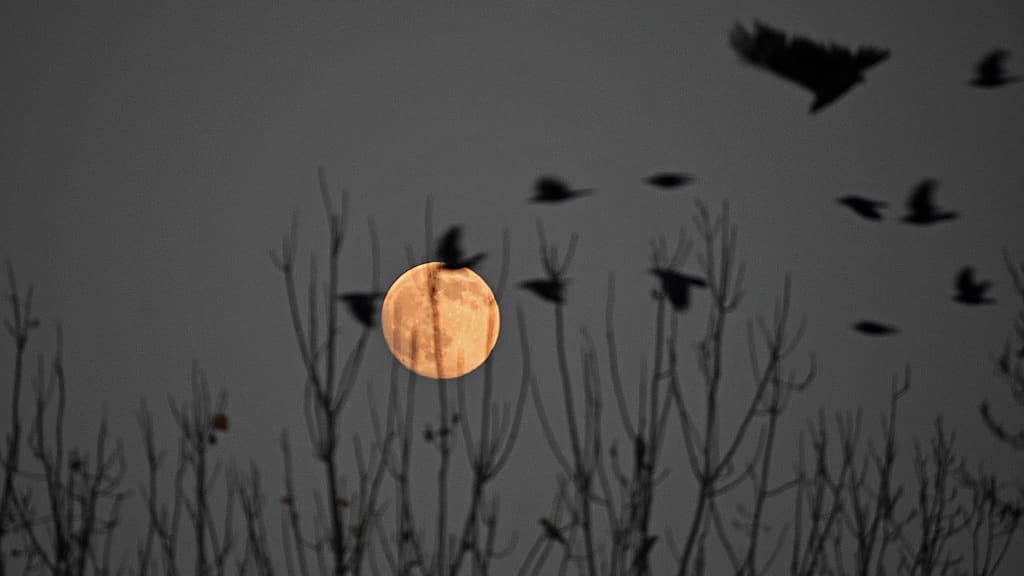
There will be a lot of things competing for your attention this Thanksgiving week: the travel, the turkey, the family, the football. But spare a moment for the sky. On Monday, Tuesday, and Wednesday, Nov. 23 to 25, a spectacular full moon known as a supermoon will shine overhead, visible both in the evening and, though not as dazzlingly, during the day. It will be the first of a run of three supermoons, the other two peaking on Christmas Eve and Jan. 22.
A supermoon is like any other full moon, only more so. A full moon occurs when the Earth sits between the sun and the moon, allowing solar light to bathe the entirety of the visible hemisphere of the moon. A new moon—or no moon at all—occurs when the moon, in the course of its orbit around our planet, sits between the Earth and the sun, so that its far side is illuminated, leaving nothing for us to see. But not every full moon is the same.
The moon’s orbit around the Earth is not perfectly circular, but rather egg-shaped, with a perigee, or closest approach to Earth, of 223,000 miles, and an apogee, or furthest remove, of about 252,000 miles. The moon’s average distance from Earth is about 239,000 miles. Full moons can occur at any point in that ellipse, and that can make a big difference in what we see. A full moon at apogee—a so-called micromoon—appears about 7% smaller than a full moon at the average 239,000-mile distance, and fully 14% smaller than a full moon at perigee, which is when the supermoon occurs. A supermoon is also up to 30% brighter than a micromoon.
No less an authority than astronomer Neil deGrasse Tyson has cast shade on the supermoon experience, posting on X in 2022, “Tonight’s Full Moon, the largest of the year, is 8% larger than an average Full Moon. Will be called by some a ‘Super Duper Moon.’ I’m okay with that, but only if you think a 16-inch pizza is super-duper-sized compared with a 15-inch pizza.”
But never mind naysaying, there’s still plenty to see.
This, as NASA explains, is a result of…
Opening of the article, excerpted from Time. To read the rest, open the article on the publisher's site.
MarketNews shows the headline and summary published by the outlet. The full article is on the publisher's website. (time.com)