How Israel Will Choose Its Next Prime Minister, Explained
Résumé détaillé
Israel’s election is over, but who will lead its next government remains undecided. Here’s how that decision will be made.
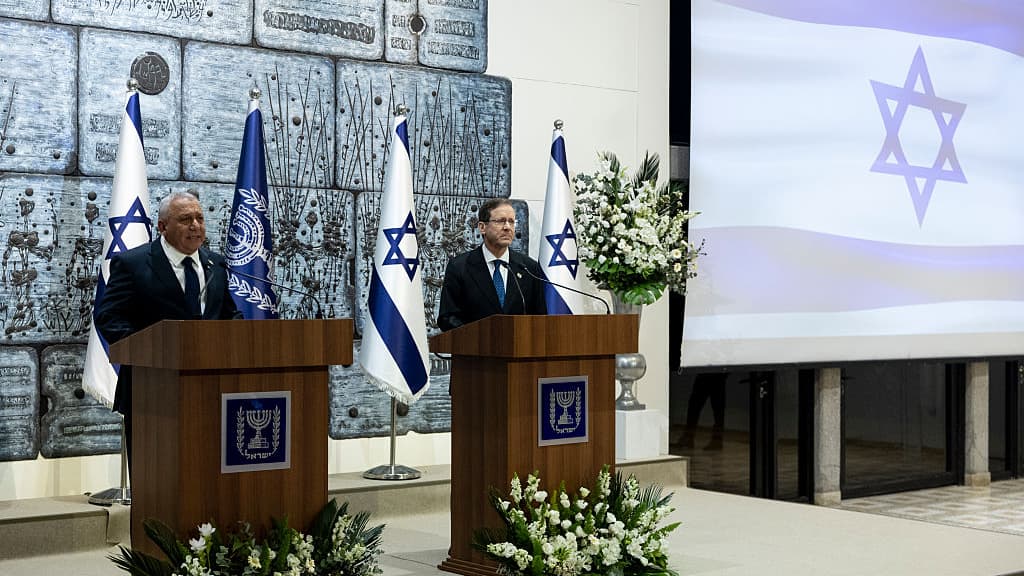
Israeli President Isaac Herzog on Sunday tasked Gadi Eisenkot, a former military chief and the leader of the center-right Yashar party, with forming the country’s next government. It’s the first of several steps necessary to determine the next Prime Minister—but a potentially months-long process could leave Benjamin Netanyahu in power for the foreseeable future.
With Herzog’s nod, Eisenkot was given 28 days, through Dec. 6, with a possible 14-day extension, to assemble a government that can win the confidence of the Knesset, Israel’s parliament. Once he notifies the President and the Knesset that he has formed a government, the lawmakers must meet within seven days for a confidence vote. The government takes office if it wins that vote.
First, Eisenkot would need to bring together rival political parties with disparate policy views and governing priorities in order to form a voting majority. By joining his coalition, parties are effectively endorsing Eisenkot as the next Prime Minister. But he has several obstacles to overcome before he can get the number of seats that he needs.
Here’s everything to know about the process Israel will undertake in its efforts to name its next Prime Minister.
In last month’s election, no party bloc secured the 61 seats needed to form a majority in the 120-seat parliament. This means that little has been decided about future leadership. But the process is still in motion.
Knesset elections are scheduled to occur every four years, with the most recent taking place Oct. 27.
Voters must be physically present on Election Day, with extremely rare absentee exceptions, and it is a public holiday. According to The Atlantic, an estimated 67,000 Israeli citizens living outside of the country traveled back this year in order to cast their ballots.
Israeli citizens vote for the political parties that they want to govern—not specific candidates.
Based on the percentage of votes cast, each party is then allotted a certain number of representatives in the…
Début de l'article, extrait de Time. Pour lire la suite, ouvrez l'article chez le média.
MarketNews présente le titre et le résumé publiés par le média. L'article complet se lit sur le site de l'éditeur. (time.com)