Dhofar Mountains among world’s top 100 geological heritage sites
Detailed summary
MUSCAT: A dramatic stretch of limestone cliffs, ancient caves and towering mineral formations in southern Oman has earned a spot among the ...
MUSCAT: A dramatic stretch of limestone cliffs, ancient caves and towering mineral formations in southern Oman has earned a spot among the world’s most significant geological landmarks.
The announcement was made on November 6 in Loulé, Portugal, during a gathering hosted by the Algarvensis Geopark that brought together 156 earth scientists from 49 countries.
For Oman, the listing is more than just a scientific accolade; it is a major boost for the country's growing geotourism sector. Selected from a global pool evaluated by over 1,000 experts, Dhofar is one of only six sites in the Middle East to make the cut on the 47-country list.
Dating back to the Neogene and Quaternary periods, the Dhofar range offers scientists a rare, open-air laboratory where two massive forces of nature—tectonics and climate — collided to shape the earth.
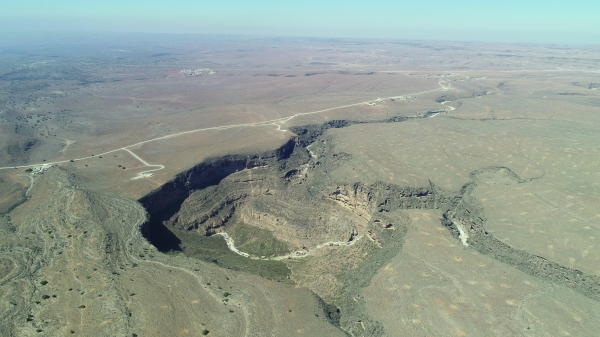
Millennia ago, the tectonic opening of the Gulf of Aden pushed ancient Precambrian rocks and overlying limestone upward, creating a high plateau. Today, that plateau drops off sharply in the south, forming sheer cliffs rising more than 1,000 metres above sea level — some plunging straight into the Arabian Sea, others framing the 20-kilometre-wide coastal plain around Salalah.
Over time, seasonal rains dissolved the limestone, carving out a rugged terrain riddled with sinkholes, deep wadis and hidden caves.
What truly sets Dhofar apart, according to the IUGS dossier, are its massive calcareous tufa barrages—natural dams built up over thousands of years as mineral-rich spring water deposited calcium carbonate across valley floors.
The crown jewel of these formations is the Wadi Darbat barrage. Stretching roughly 800 metres across and towering over 100 metres high, it is a geological marvel that the IUGS notes has no equal anywhere else on the planet. Formed during wet climatic phases in the Middle Pleistocene, several of these formations still come alive every year during Dhofar’s famous Khareef Dhofar Season.
While geologists initially flocked to…
Opening of the article, excerpted from Oman Observer. To read the rest, open the article on the publisher's site.
MarketNews shows the headline and summary published by the outlet. The full article is on the publisher's website. (www.omanobserver.om)