Getting wasted with the bin wonks: How to deal with a problem as old as human settlement
Résumé détaillé
"It's a murky industry, don't believe anything anyone tells you!" an attendee at the Waste Expo tells Crikey. The post Getting wasted with the bin wonks: How to deal with a…
When I ask what he and his friend Evan are doing here, surrounded by waste policy wonks, bin designers and e-waste-sorting software developers, Declan answers with the “I thought this might come up” tone of someone I suspect isn’t speaking to a journalist for the first time. They are, he says, “waste enthusiasts”. They are both 12.
They’ve been coming to Melbourne’s annual Waste Expo — held in the sprawl of the Melbourne Convention and Exhibition Centre — for years, talking to vendors, examining the bins and giant compactor trucks, collecting merch. “Is the merch good?” I ask. Evan’s mum gestures at a branded mouse pad with a laugh: “They think so!”
It’s a waste-free event: the cafe serves coffee in steel cups that you return to tubes housed in little bins, which in turn get wheeled away and replaced throughout the day, a little simulacrum of how things might be if we managed what we create and throw away better.
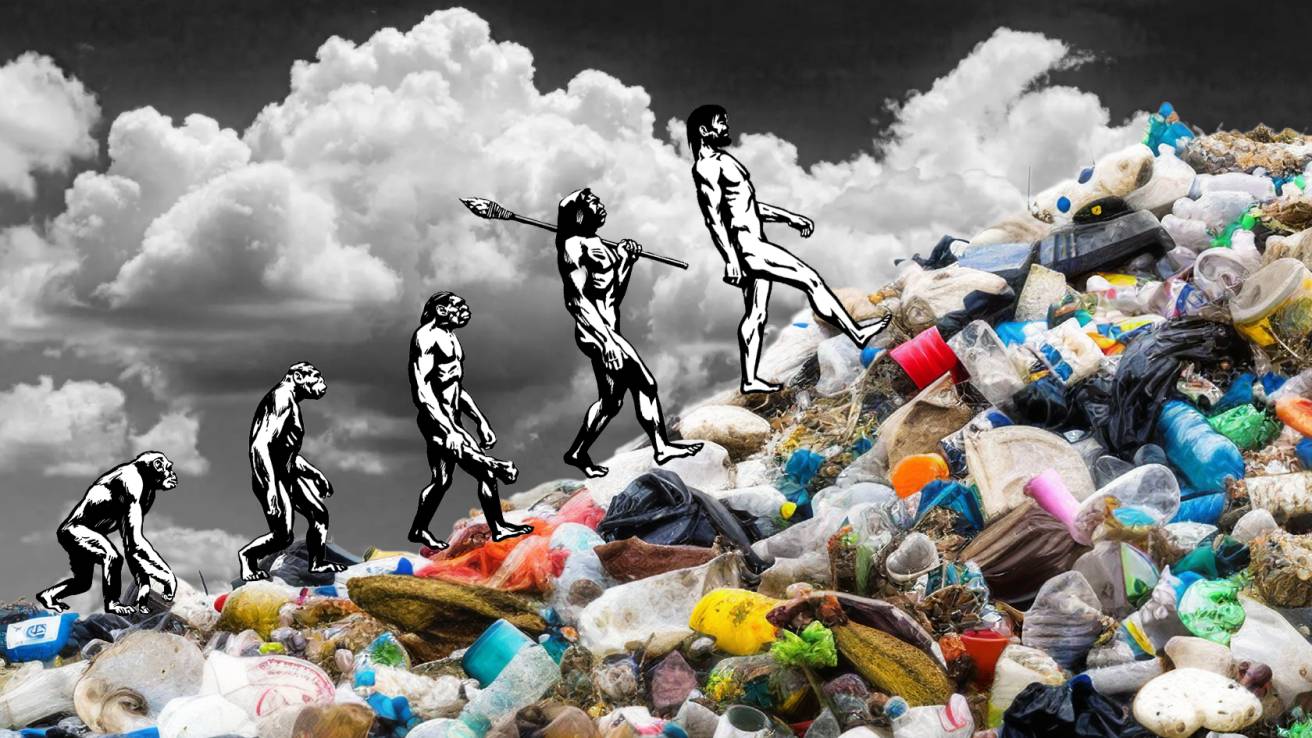
Here is a statistic you won’t be able to stop thinking about: in 2020, the mass of human-made things in use on Earth began to exceed the mass of all living biomass. We’ve now created more stuff — which in one way or another will have to be dealt with one day — than all living things. And according to Alexander Clapp’s 2025 book Waste Wars, for every human currently alive, there is slightly more than a tonne of plastic out there — “scattered on land, or layered in the ground, or adrift at sea”.
By continuing, you agree to our Terms & Conditions and Privacy Policy.
Ever since humans stopped being primarily nomadic and began to cluster in built environments, our history can be told as legibly through what we discard as through any art or writing. Çatalhöyük, the 9,000-year-old apartment city in the centre of what is now Türkiye, isn’t just the site of one of the first cities; it’s also the site of one of the first landfills.
Its residents, writes academic and writer Sarah Hill, “lived atop land that their antecedents created out of remnants of themselves (dead…
Waste…
Début de l'article, extrait de Crikey. Pour lire la suite, ouvrez l'article chez le média.
MarketNews présente le titre et le résumé publiés par le média. L'article complet se lit sur le site de l'éditeur. (www.crikey.com.au)