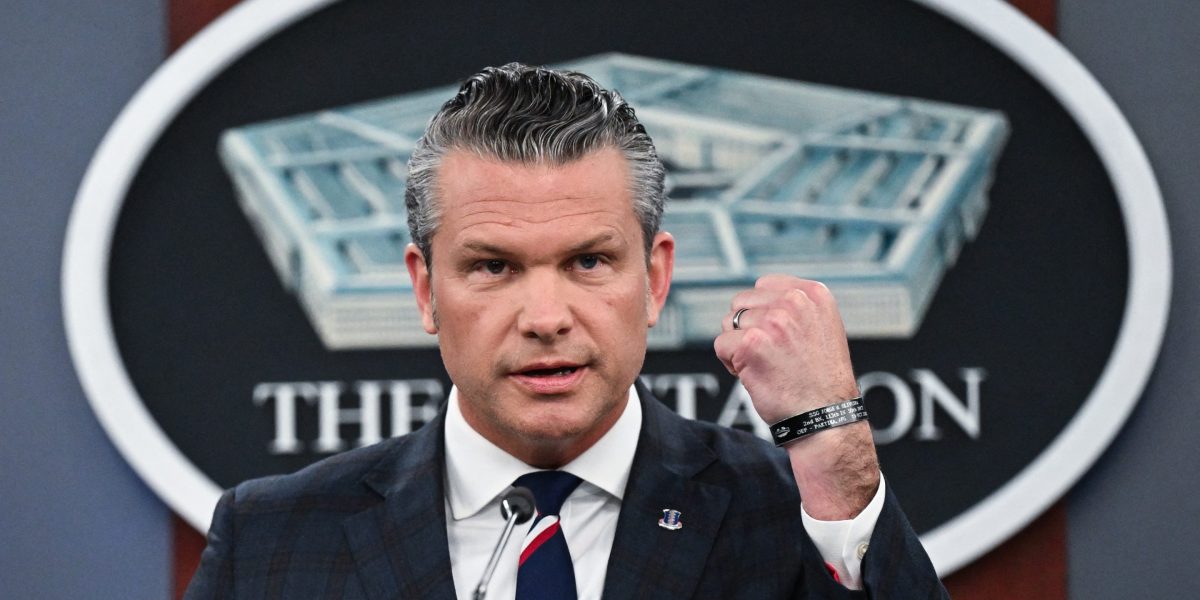
Pete Hegseth’s $1.5 trillion Pentagon budget request is DOA after Democrats swept midterms, but global defense spending could still hit $8 trillion
Detailed summary
“What is driving this whole enormous bill? In Europe, it's the combination of the war for four years in Ukraine and Russia, and the unreliability of the United States to support NATO.”
A wave of Democratic midterm victories may have put the kibosh on the Trump administration’s plans to boost the Pentagon’s budget, but global defense spending is expected to top $8 trillion anyway.
Rep. Adam Smith, the top Democrat on the House Armed Services Committee, argued in a letter to colleagues that the Defense Department’s proposed $1.5 trillion budget for 2027, a more than 40% increase, was too high and would come at the expense of services to the American people.
He called for a smaller military budget as well as a probe into the Pentagon’s dealings with defense contractors.
“We must thoroughly review our national defense strategy and develop a more realistic and sustainable approach that does not require a defense budget in excess of $1 trillion or paid for through draconian cuts to critical domestic programs,” Smith wrote.
Economists and public policy experts say a growing interest in cybersecurity and rearmament amid ongoing geopolitical conflicts has accelerated a cycle of defense spending that slowed after the Cold War and ramped up again after 9/11.
According to asset management firm Carlyle, defense spending has increased to 2.0% of the GDP across the G7 countries of Canada, France, Germany, Italy, Japan, the UK, and U.S. That’s the highest share in more than three decades. At the current rate of spending, it could reach 3.8%, or roughly $8 trillion in defense commitments.
The U.S. accounts for about one-third of the world’s defense spending, surging past the $1 trillion mark in fiscal 2026. While it’s by far the biggest spender—providing aid and arms to allies in Europe as well as its own military—other wealthy nations are accounting for a growing share of the world’s defense outlays.
As war continues in the Middle East and Ukraine, countries are shifting how they think about risk. Rather than responding to or preparing for a particular conflict, countries are building up their resources as part of a structural shift, leading to a worldwide rearmament…
“N…
Opening of the article, excerpted from Fortune. To read the rest, open the article on the publisher's site.
MarketNews shows the headline and summary published by the outlet. The full article is on the publisher's website. (fortune.com)