Evidence of deepest explosive volcanic eruption found in Pacific’s Mariana Trench
详细摘要
The Mariana Trench is among the deepest oceanic valleys on the planet. Read more at straitstimes.com.
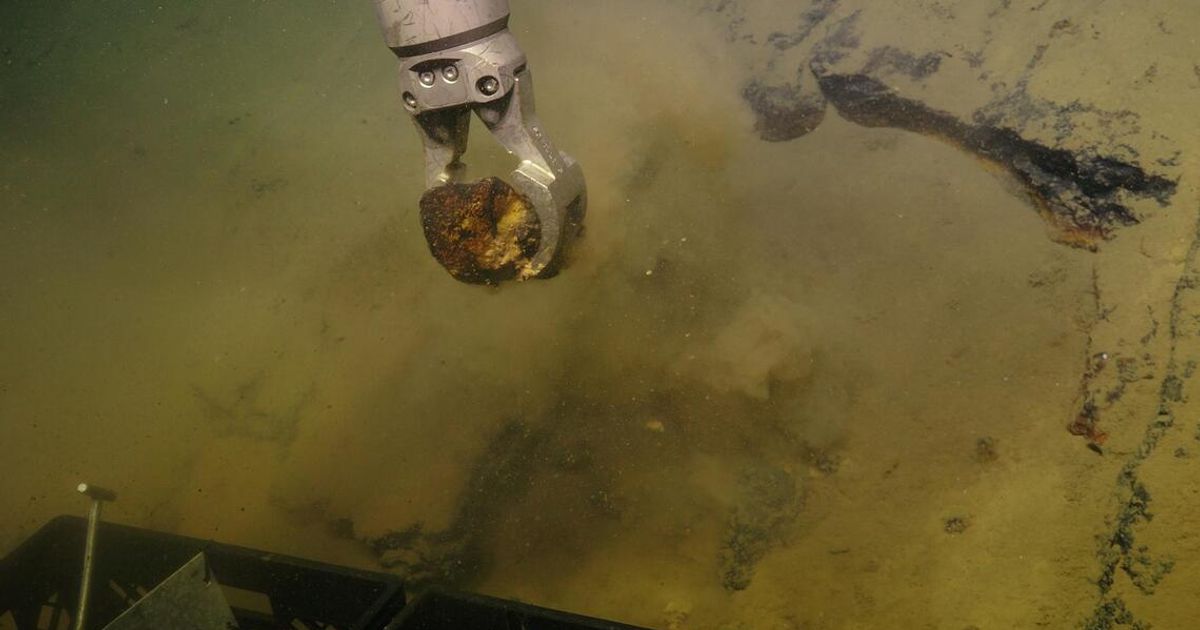
A remotely operated vehicle collecting samples in a part of the Mariana Trench called the Challenger Deep in 2024.
WASHINGTON - An international team of marine geologists using a remotely operated submarine in an abyss in the western Pacific Ocean has found evidence of the deepest-known explosive volcanic eruption on Earth as much as 6,500m below the surface.
The researchers sailed to the Mariana Trench, among the deepest oceanic valleys on the planet, to deploy a remotely operated vehicle, or ROV, called Jason/Medea. They used the ROV to study the trench walls around the deepest-known point of seabed on Earth, called the Challenger Deep.
The ROV observed and collected pyroclastic rocks, telltale evidence of an explosive volcanic eruption composed of ejected rock fragments and volcanic glass.
“The key findings are the discovery of recent igneous activity near the trench,” said geologist Robert Stern, a professor emeritus at the University of Texas at Dallas and a visiting researcher at UCLA who is the lead author of a study describing the findings in the journal Frontiers in Earth Science.
“Pyroclastic rocks are well known from volcanic eruptions on land and even in the shallow ocean, but they aren’t known from as deep as we discovered them,” Stern said.
The Mariana Trench formed as part of a process called plate tectonics involving the inexorable movement of continent-scale plates on Earth’s surface. The trench is the surface manifestation of a subduction zone, the boundary where one plate dives beneath another plate.
The surface above the subduction zone typically has big volcanoes, but these are generally located about 200km to 300km from the trench. The pyroclastic rocks that the researchers discovered were in the trench itself.
The ROV explored along 550km of a geological structure called a forearc that is part of the upper plate between the trench and a line of volcanoes on the seafloor, near the Challenger Deep.
文章开头,摘自The Straits Times。如需阅读全文,请前往媒体网站。
MarketNews 仅展示媒体发布的标题和摘要,全文请在出版方网站阅读。 (www.straitstimes.com)