6 Night Sky Events to See in December, From Colorful Meteors to the Decade’s Biggest Full Moon
Résumé détaillé
One of the year’s most prolific meteor showers, the closest full moon since 2018, and two planet parades will bring a spectacular year of stargazing to a close.
One of the year’s most prolific meteor showers, the closest full moon since 2018, and two planet parades will bring a spectacular year of stargazing to a close.
December is the cherry on top of an action-packed year for stargazing, with a host of wonders to watch. Several meteor showers are on the horizon this month—including one of the year’s most powerful displays. Later in the month, we’ll also witness the closest supermoon we’ve seen yet this decade.
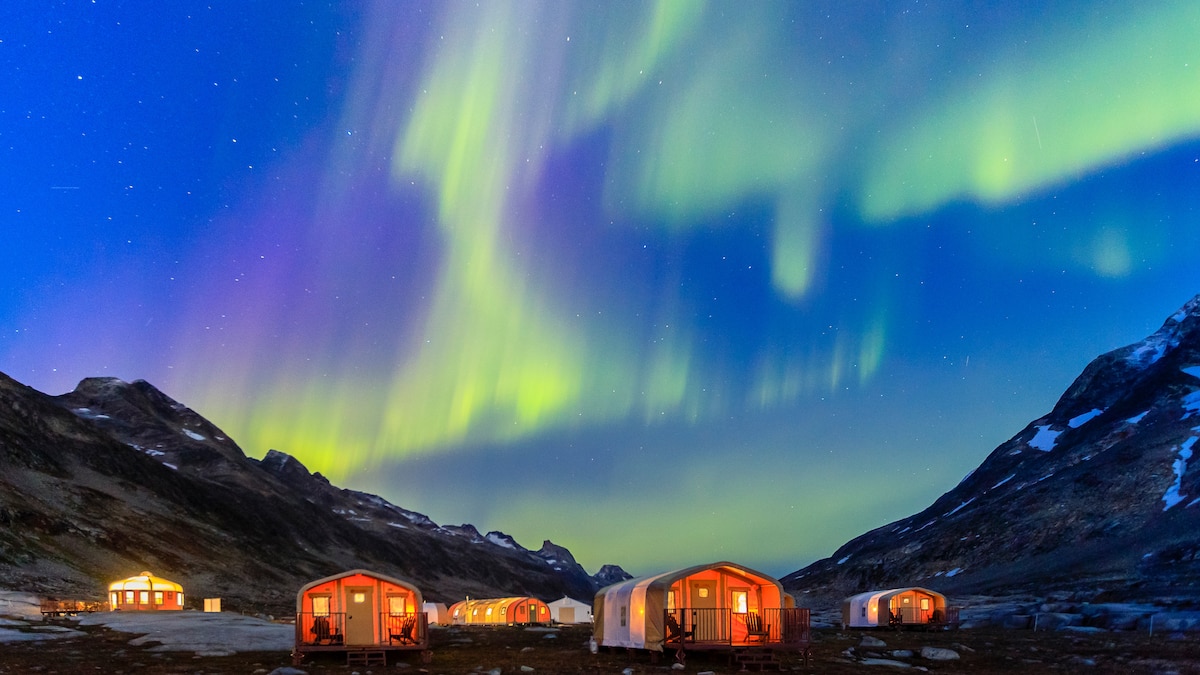
The month’s shrinking daylight hours, up until the December 21 solstice, also bring extended sky-watching hours in the Northern Hemisphere. It’s a great time to chase the aurora borealis, whether you’re scouting by train, sky-view bed, or cultural tour.
Here are the top things to watch for in December’s night sky, with tips on where and when to watch.
The new moon phase is prime time for watching the heavens, as the lack of moonlight makes the Milky Way and deep-sky objects easier to spot. Use the new moon overnight from December 8 to 9 to look for far-away sights like the Orion Nebula, a star nursery located just below Orion’s three-dot belt.
December is also an optimal time to see Pleiades, a cluster of over 1,000 stars. You can see around seven with the naked eye, although many more come into focus with binoculars or a telescope. December is also an ideal month to grab your telescope and look for the Crab Nebula, a bulging remnant of a supernova circa 1054 CE. Use a stargazing app to locate these deep-sky sights, plus many others.
The shortest day of the year in the northern hemisphere is an ideal time for stargazing or, better yet, aurora hunting. Around the winter solstice, you can enjoy reliable light displays if you head north toward the auroral zone, the hub of auroral activity.
Iceland, Greenland, Canada, and Alaska are among the best places to catch the northern lights. Towns across these locales also host festivals to celebrate polar night. If you’re looking for sun, not snow, head south.
The Geminids are among…
Début de l'article, extrait de National Geographic. Pour lire la suite, ouvrez l'article chez le média.
MarketNews présente le titre et le résumé publiés par le média. L'article complet se lit sur le site de l'éditeur. (www.nationalgeographic.com)