Rocket from Boeing-Lockheed firm fails mid-flight, destroys payload of Amazon satellites
Résumé détaillé
BROWNSVILLE, Texas, Nov 15 - A Vulcan rocket owned by United Launch Alliance, the joint venture of Boeing and Lockheed Martin, failed on Sunday shortly after liftoff from Florida, destroying its payload of 40 satellites for Amazon's Leo internet network in the launch company's first mission failure. Read more at straitstimes.com.
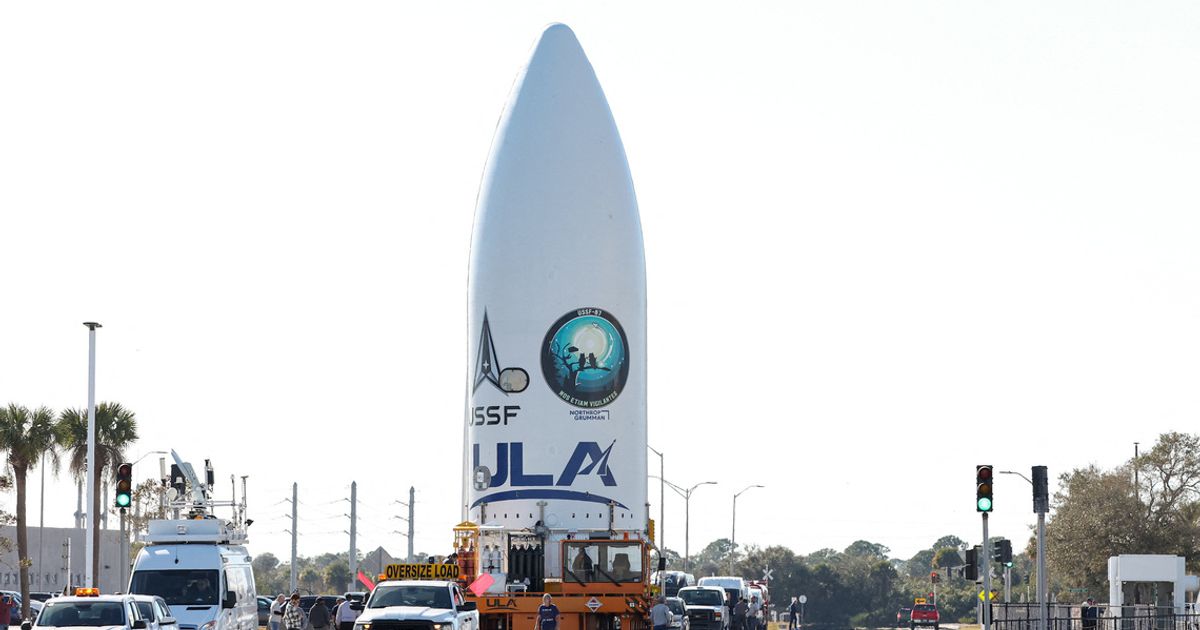
FILE PHOTO: A United Launch Alliance (ULA) payload faring carrying a national security spacecraft to be attached to Vulcan rocket for USSF-87, travels down a road at the Kennedy Space Center in Cape Canaveral, Florida, U.S., February 3, 2026. REUTERS/Brendan McDermid/File Photo
BROWNSVILLE, Texas, Nov 15 - A Vulcan rocket owned by United Launch Alliance, the joint venture of Boeing and Lockheed Martin, failed on Sunday shortly after liftoff from Florida, destroying its payload of 40 satellites for Amazon's Leo internet network in the launch company's first mission failure.
The rocket failed roughly 10 minutes after liftoff from the Cape Canaveral Space Force Station in Florida, and the cause was not immediately clear. It represented a major setback for the two-decade-old company's new flagship rocket as it sought to begin a regular cadence of launches for Amazon's burgeoning satellite internet constellation.
"Based on data received by our Launch Director, we confirm that the Vulcan vehicle launched from Space Launch Complex 41 suffered an anomaly 10 minutes into the flight and failed to deliver the Amazon mission to orbit," ULA said in a statement.
"Every flight generates data, and every flight teaches us something. Since the anomaly just occurred, we don’t have any specific data yet to understand what occurred today."
The mission was Vulcan's fifth since its 2024 debut and first in nine months, following a launch hiatus drawn out by separate technical investigations into its solid rocket side-boosters and its core BE-4 engines, which are supplied by Amazon founder Jeff Bezos' Blue Origin space company.
The boosters were being scrutinized for issues encountered on Vulcan's last two flights, including a mission in February for the US Space Force. Both missions successfully delivered their payloads to orbit, but the Pentagon had not yet approved the rocket to resume flying national security payloads, pending its performance with the Amazon mission on Sunday.
Blue Origin's…
It…
Début de l'article, extrait de The Straits Times. Pour lire la suite, ouvrez l'article chez le média.
MarketNews présente le titre et le résumé publiés par le média. L'article complet se lit sur le site de l'éditeur. (www.straitstimes.com)