Rip out ugly clutter to help revive UK high streets, says thinktank
Detailed summary
Exclusive: Report says restricting cars and freeing up pavement space could be a cheap way to entice shoppersThe long decline of the high street is a problem that has gripped…
Exclusive: Report says restricting cars and freeing up pavement space could be a cheap way to entice shoppers
The long decline of the high street is a problem that has gripped British governments for years. But what if there was a solution no one had considered before – doing it all on the cheap?
Spending less money is, admittedly, just one element of a report led by the urban thinktank Create Streets. But it does argue that rather than multimillion-pound revamps, a better answer could be smaller changes aimed at making town and city centres more appealing.
Central to this, the study says, is trying to banish, or at least tame, motor traffic, because too often urban centres are places “designed to be driven through, not for time to be spent in”.
As well as citing a lack of imagination, the report blames planning regulations that favour conformity and clutter and too often treat speeding cars as a given, to which everything else must adjust.
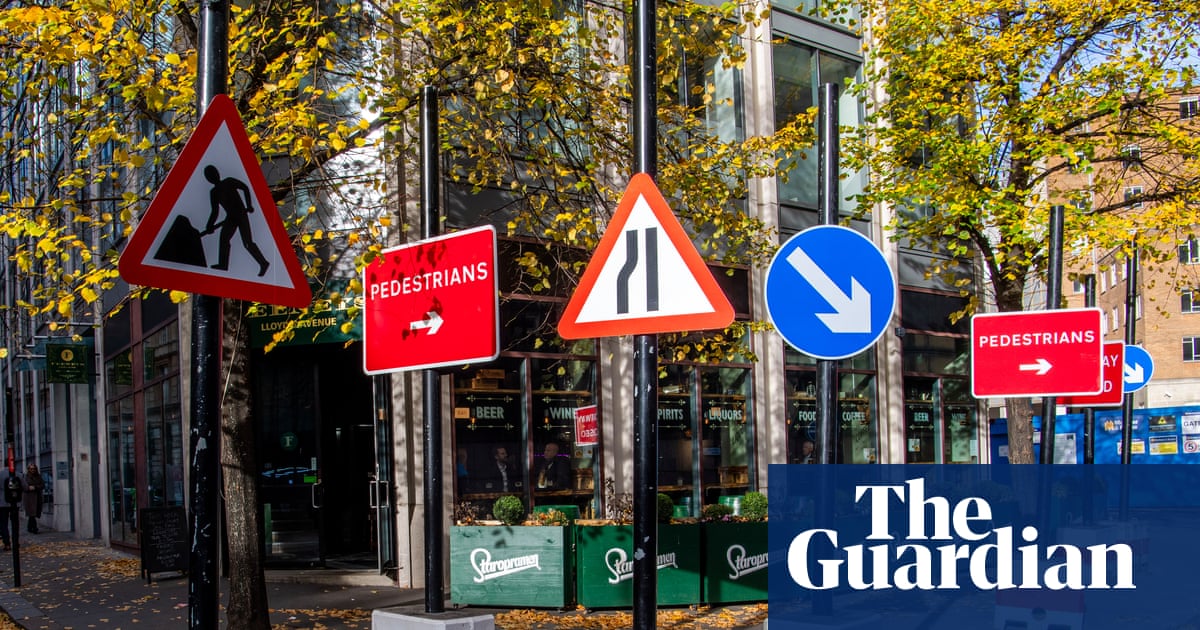
“The default high street is engineered for traffic and furnished from a catalogue: a tarmac pavement, guardrails penning people at the kerb, litter bins ordered from a procurement catalogue, a row of plastic planters – public investment that is joyless,” it says.
While planners have traditionally focused on car access as a metric for thriving town centres, calculations for the Create Streets report suggest that replacing parking with other kerbside infrastructure, including bike spaces or outside drinking and dining areas, creates more economic value.
It found that one parking space in the high street of a market town is typically used by about 3.5 vehicles a day, bringing in just over £73,000 a year in spending to nearby shops.
But the same 12 square metres, if used to hold nine share e-bikes, generates an average of 13 trips a day, with over £146,000 a year in spending, even taking into account the lower average spend per person.
Opening of the article, excerpted from The Guardian Business. To read the rest, open the article on the publisher's site.
MarketNews shows the headline and summary published by the outlet. The full article is on the publisher's website. (www.theguardian.com)