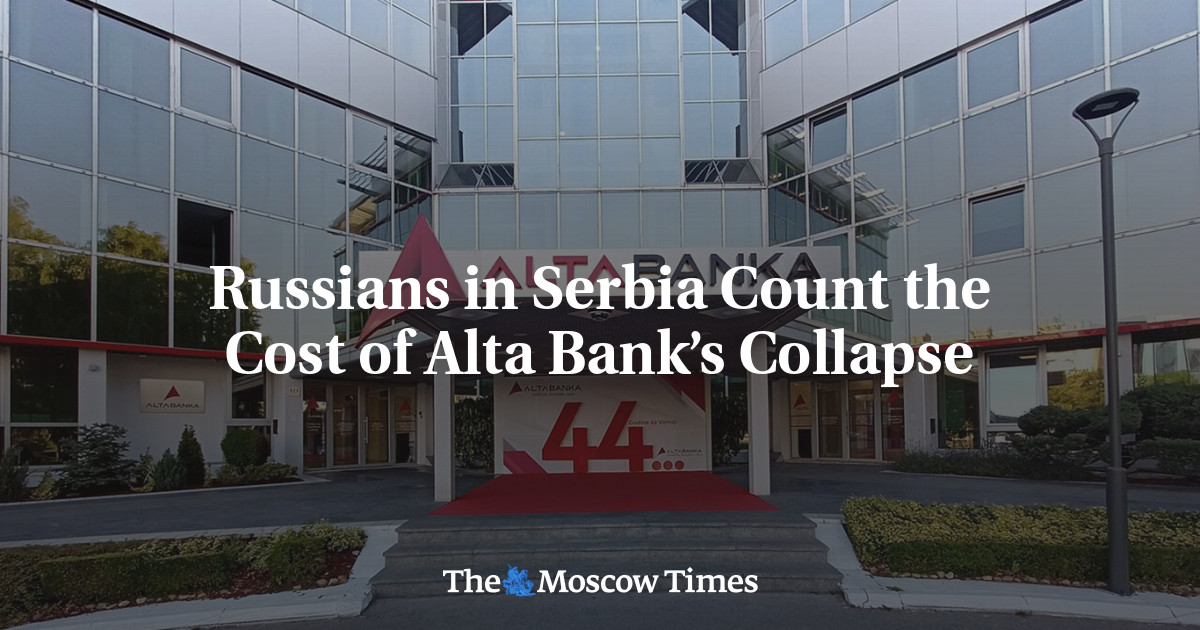
Russians in Serbia Count the Cost of Alta Bank’s Collapse
Résumé détaillé
On the morning of Oct. 31, Alexandra Yakusheva was expecting a delivery at Auditoria, the bookshop, café and event space that she runs in Serbia’s capital, for that night’s…
On the morning of Oct. 31, Alexandra Yakusheva was expecting a delivery at Auditoria, the bookshop, café and event space that she runs in Serbia’s capital, for that night’s Halloween party.
When the delivery arrived, she was surprised to find that her bank card wouldn’t work. In fact, her bank, Alta, had shut down completely.
Auditoria’s staff managed to scrape together enough cash for the delivery driver, who refused to hand over the goods until he was paid.
“It was messy, and maybe a little funny in hindsight,” she told The Moscow Times, “but it wasn’t funny back then.”
Yakusheva is among thousands of Russians affected by the collapse of Alta Bank, a lender popular with the large community of Russian emigres in this Balkan country before Serbia’s central bank shut it down late last month.
“Russians were using this bank because they had no other option of opening a bank anywhere else,” said Helena Ivanov, an associate researcher at the Henry Jackson Society.
Many Russians kept their life savings there, including earnings from businesses they had started in Serbia and proceeds from the sale of apartments back home.
Because Alta did not inform its customers of the closure, word spread through Telegram and by word of mouth.
“Everybody understood,” Yakusheva said. “The party went better than expected, because many guests came not only to have fun but to support us and each other.”
Début de l'article, extrait de The Moscow Times. Pour lire la suite, ouvrez l'article chez le média.
MarketNews présente le titre et le résumé publiés par le média. L'article complet se lit sur le site de l'éditeur. (www.themoscowtimes.com)