EU-Indonesia trade deal opens new markets, but challenges remain
详细摘要
The agreement offers new export and investment opportunities for Jakarta and Brussels. But can Indonesia turn Europe's growing interest in its markets and critical minerals into sustainable gains at home?
As the European Union seeks to deepen its presence in Asia and diversify its trade relationships, Indonesia is emerging as an increasingly important partner.
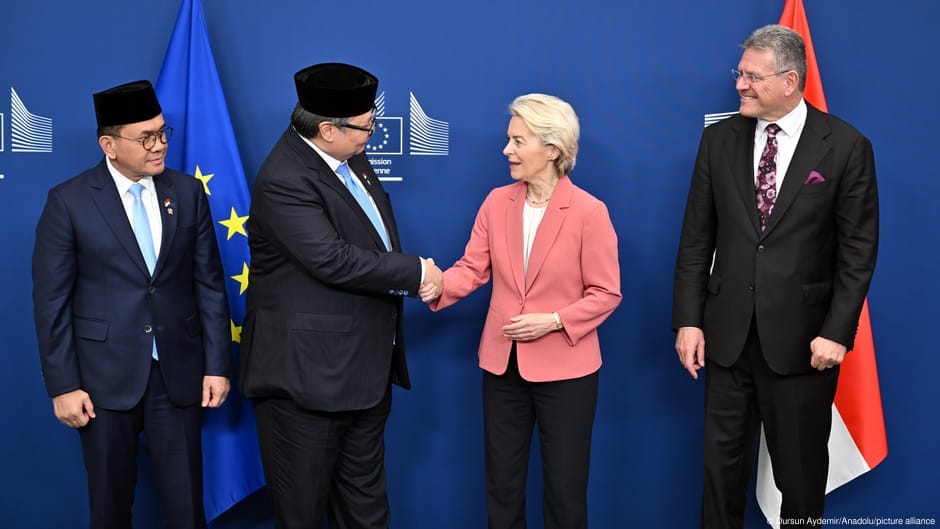
At a signing ceremony in Brussels last week, European Commission President Ursula von der Leyen described the bloc's trade agreement with Jakarta as one of its "most ambitious deals" in the region, linking markets of 730 million people.
The deal, the culmination of nearly a decade of negotiations, reflects the EU's efforts to diversify its trade partnerships, secure access to critical raw materials and reduce strategic dependencies on China.
For Indonesia, it offers opportunities to attract investment, expand exports and strengthen its position in global supply chains.
The agreement will gradually scrap tariffs on more than 98% of product categories, covering almost the entire value of bilateral trade over 15 years.
To view this video please enable JavaScript, and consider upgrading to a web browser that supports HTML5 video
For the EU, gaining better access to critical raw materials, particularly nickel, and diversifying its supply chains are central to its strategic partnership with Indonesia, said Philip Schleifer, an associate professor of political science at the University of Amsterdam.
"The main strategic interests are opening up a large and growing market for European companies, diversifying and deepening its economic partnerships, reducing strategic dependencies on China, and securing access to critical raw materials," Schleifer told DW.
Indonesia's mineral resources are particularly important for Europe's green and digital transitions. Nickel, for instance, is a key material for batteries and electric vehicles.
文章开头,摘自DW Business。如需阅读全文,请前往媒体网站。
MarketNews 仅展示媒体发布的标题和摘要,全文请在出版方网站阅读。 (www.dw.com)