Grattan on Friday: Labor’s political capital is in deficit. Now it has to find ways to replenish it
Résumé détaillé
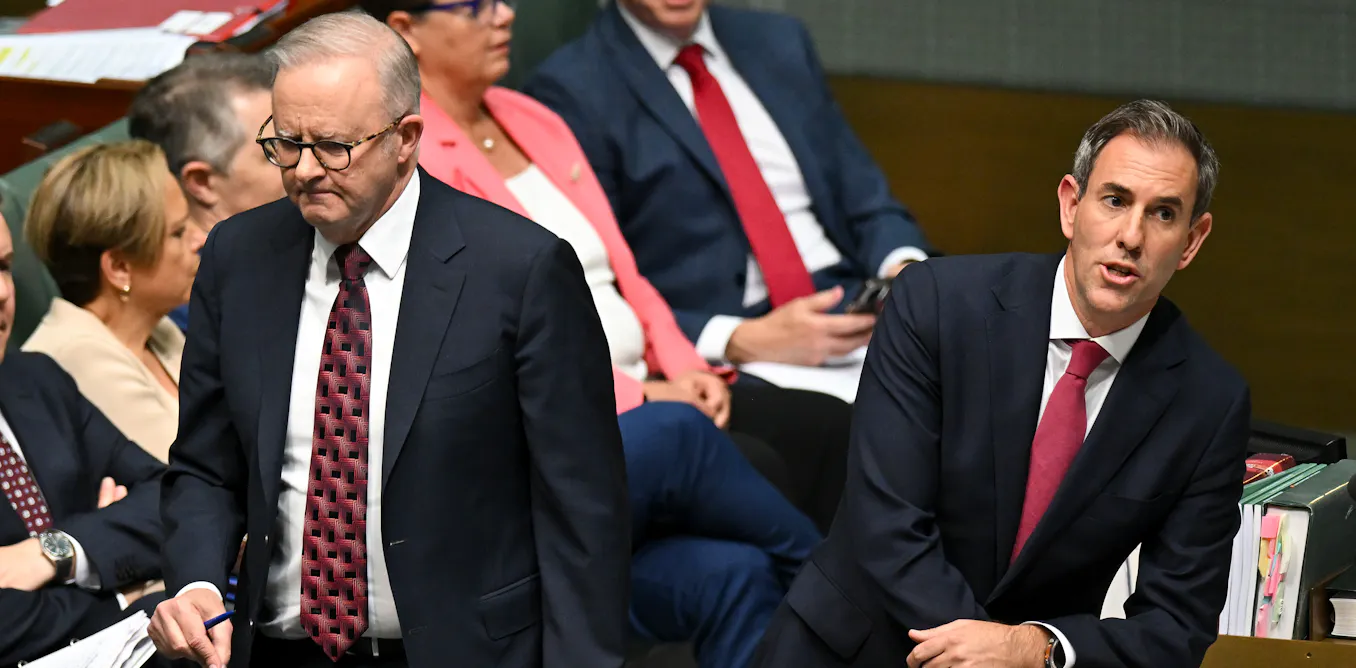
Halfway through the parliamentary term the Labor party is, in effect, already moving into election mode.
The first meeting of Labor’s national campaign committee, held on Monday this week, can be seen as a marker. Halfway through the parliamentary term the party is, in effect, moving into election mode.
In recent months the government has spent a lot of its stock of political capital – probably more than it would have anticipated a year ago. The 2026 budget met calls from its base for reform in the “Labor” tradition, with changes that moved a greater share of the tax burden onto assets. But it was more unpopular than some in the government might have expected.
In the coming year and a half, Labor is unlikely to be so adventurous. With its vote in the doldrums and the prime minister deeply unpopular, it needs to regrow its capital – and to do this in what is shaping as a vastly different climate from 2025, when it turned the tables so adroitly on the Coalition.
One Nation is now towering as a political threat to Labor, as well as to the Coalition. The economy is a millstone for the government. Outside Australia’s borders, the actions – negative or positive – of an unpredictable American president, wounded by the US midterm election rout but still wielding vast power, will have their impact.
Recent weeks have seen worsening economic news: another interest rate rise early this month, a climb in unemployment last week, higher inflation this week.
Various possible economic scenarios loom as Labor contemplates 2027–28, driven in large part by factors beyond the government’s control.
At worst, the economy goes into recession. This is not predicted by either Treasury or the Reserve Bank, but feared by an increasing number of economists.
The second scenario would see the economy bump along about where things are, with voters financially squeezed and angsty, real wages barely moving, but overall growth still positive.
The third scenario would have 2028 in a happier place economically, with inflation under control, interest rates somewhat lower, and real wages perking up.
Début de l'article, extrait de The Conversation AU. Pour lire la suite, ouvrez l'article chez le média.
MarketNews présente le titre et le résumé publiés par le média. L'article complet se lit sur le site de l'éditeur. (theconversation.com)