Rebuild, or relocate? Displaced Nepali families remain in limbo weeks after flood.
Detailed summary
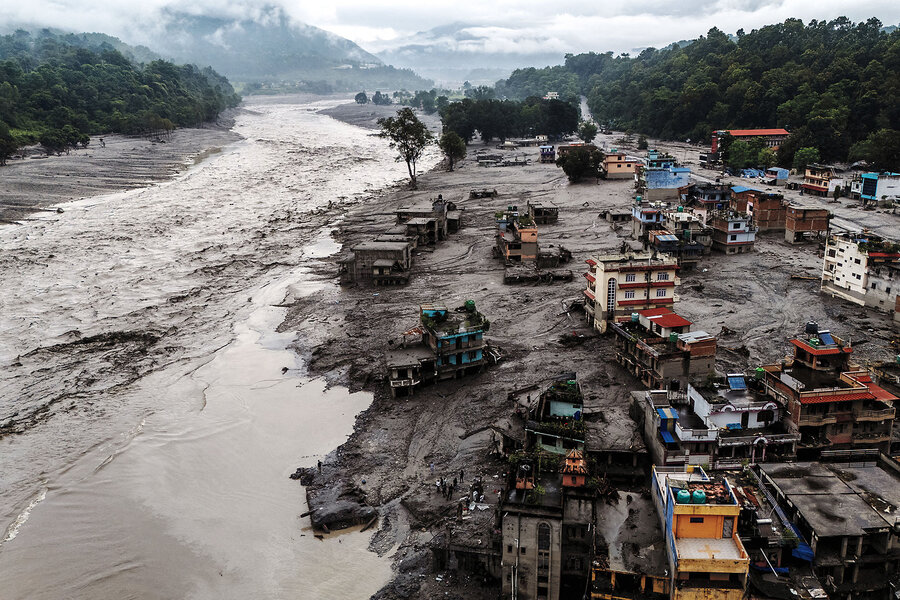
Floodwaters destroyed the once-bustling market town of Dhunge. Now, its residents face difficult questions about how – and where – to rebuild.
Floodwaters destroyed the once-bustling market town of Dhunge. Now, its residents face difficult questions about how – and where – to rebuild.
Shanti Lamichane pulls a long-handled hoe toward her, scraping wet earth and stones from a mound of debris. Beneath her muddy feet is the spot where she used to perch by her restaurant’s wooden reception desk – a proud and newly minted business owner, watching buses of tourists pull into the riverside market town of Dhunge.
On Aug. 26, an avalanche of rock and ice came crashing down near the Nepal-China border, and unleashed a once-blocked tributary onto the Bhote Koshi and Trishuli river systems. In the weeks after, more than 1,500 people were reported dead and over 5,600 missing. A preliminary government assessment places total recovery and reconstruction costs at $4.8 billion – money the Nepalese government still has to gather and allocate. It must also decide whether it’s willing to invest in reconstruction along the region’s riverbanks, especially as scientists warn that a warming climate and melting glaciers could make floods like these more frequent, and more destructive.
Nepalis displaced by this summer’s floods are searching for a sense of home and security. Some hope to find it in the muddy remains of their riverside towns, while officials and experts warn that rebuilding in the same places could expose these communities to future disasters.
Some residents are eager to leave Dhunge and rebuild elsewhere, but others cannot imagine abandoning the place where they have spent their lives.
“It felt like the end of the world,” says Ms. Lamichane, lifting larger stones from the mud with her bare hands. “The flood destroyed everything – our homes, our life savings, our businesses, and so many lives. But this is still our home. ... I don’t know what to do.”
Customers were eating vegetable-stuffed parathas and drinking tea when a police pickup passed the morning of Aug.
Patrons abandoned their meals and ran. Ms. Lamichane followed.
A…
Opening of the article, excerpted from The Christian Science Monitor. To read the rest, open the article on the publisher's site.
MarketNews shows the headline and summary published by the outlet. The full article is on the publisher's website. (www.csmonitor.com)