Dodging space junk costs $58 million a year. Meet the Space Force contractor who made ‘autopilot for satellites’ to save money for taxpayers
Résumé détaillé
NASA puts space junk’s yearly cost to U.S. satellites at $58 million, mostly military and civil. Syracuse-based BQP says faster math can help
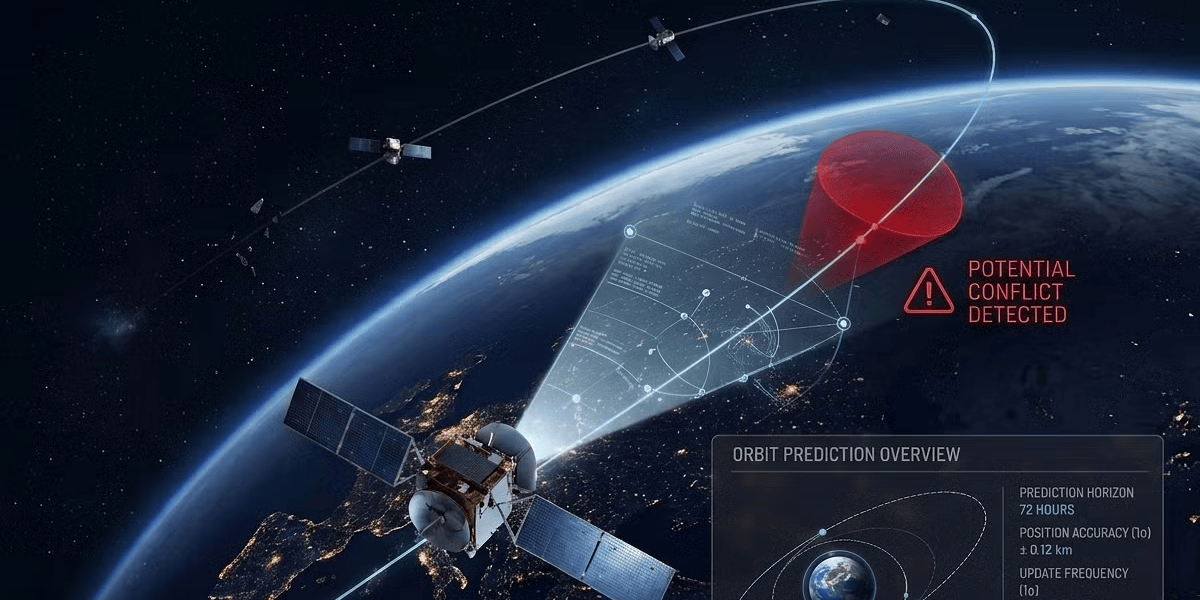
Every time a satellite swerves around a piece of space junk, it can burn about $1 million worth of fuel, according to NASA. Across U.S. satellites, NASA says the cost of debris is about $58 million a year, most of it borne by military and civil spacecraft that taxpayers pay for.
That is what BQP—a Syracuse, N.Y., simulation company that began in India in 2020 and now works for the Space Force—is trying to solve. Earth orbit is filling up faster than Washington can decide who should police it. BQP says its software, which founder and CEO Abhishek Chopra calls “autopilot for satellites,” can cut that bill by letting spacecraft decide on their own when to move.
“It’s completed the ground testing successfully,” Chopra said of a test on a partner company’s hardware. “It’s actually flying to International Space Station to be tested in the real space environment.”
There’s a long history of spacecraft turning into trash—and authorities trying to enforce some accountability.
When NASA’s Skylab space station crashed over Western Australia in 1979, the Shire of Esperance fined the agency $400 for littering, but NASA never paid. And bills have only gotten bigger. In 1978, a Soviet satellite, Cosmos 954, scattered radioactive debris across Canada’s Northwest Territories. Canada billed Moscow about 6 million Canadian dollars and settled for 3 million. But the FCC didn’t fine a company over space debris until 2023, when it charged Dish Network $150,000 for parking a dead satellite in the wrong orbit.
Air travel faced its own reckoning. In 1956, two airliners collided over the Grand Canyon, killing all 128 people aboard, and Congress responded with the law that created what is now the Federal Aviation Administration.
But that authority is lacking in orbit, Chopra said, with the closest thing to an air traffic controller being the U.S. military. The Space Force tracks about 60,000 objects and sends collision warnings free of charge to satellite operators worldwide.
The Commerce Department…
Début de l'article, extrait de Fortune. Pour lire la suite, ouvrez l'article chez le média.
MarketNews présente le titre et le résumé publiés par le média. L'article complet se lit sur le site de l'éditeur. (fortune.com)