Cheaper airfares hinge on lower costs, including fuel

Résumé détaillé
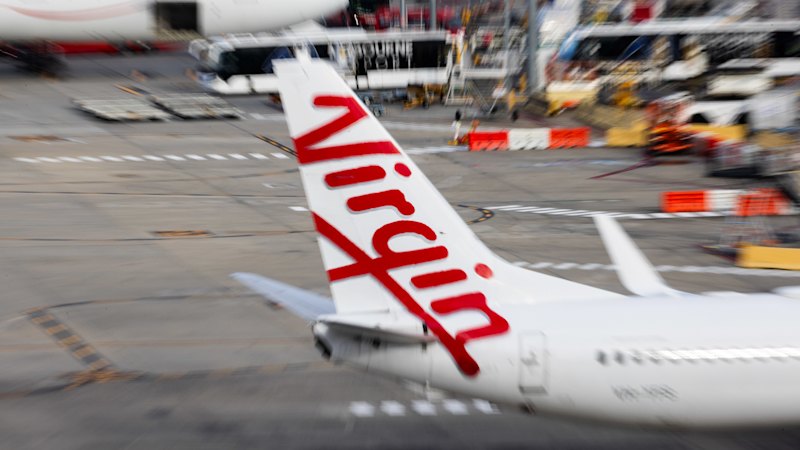
Virgin Australia has told its shareholders it's being realistic about the outlook for the aviation industry as the Middle East war continues to push up prices.
Australia's second-biggest airline continues to navigate a challenging environment where strong passenger demand and load factors are being threatened by higher fuel costs.
Virgin Australia is confident its strong balance sheet, hedging program and cost management will be enough to overcome most of the inflationary pressures being driven by the Middle East war.
"As we look ahead, the board is realistic about the pressure facing aviation," chair Peter Warne told investors on Friday.
"Our responsibility is to ensure Virgin Australia is positioned to navigate that uncertainty while continuing to create sustainable long-term value."
Last week, the carrier revealed it expects a fuel bill of around $700 million for the first half of 2026/27, with hedging for Brent crude oil and refining margins partly offsetting global volatility.
However, fuel costs in the second half are expected to be higher than the first half, after negligible margin hedging.
In contrast, Virgin offset most of its fuel costs with judicious hedging in 2025/26, leaving its annual bill flat at $1.1 billion.
Mr Warne admitted Virgin's share price hadn't lived up to its progress since relisting on the stock exchange in June 2025 after surviving a corporate near-death experience.
Chief executive Dave Emerson said he was focused on growing earnings and improving margins "over time".
Début de l'article, extrait de PerthNow. Pour lire la suite, ouvrez l'article chez le média.
MarketNews présente le titre et le résumé publiés par le média. L'article complet se lit sur le site de l'éditeur. (www.perthnow.com.au)