Thousands of flights affected by FAA ground stop. Here are your rights as a passenger
Detailed summary
Thousands of flights across America were delayed, canceled and stuck on the tarmac Friday after the FAA announced a ground stop. Here's what to know if you are affected.
This is read by an automated voice. Please report any issues or inconsistencies here.
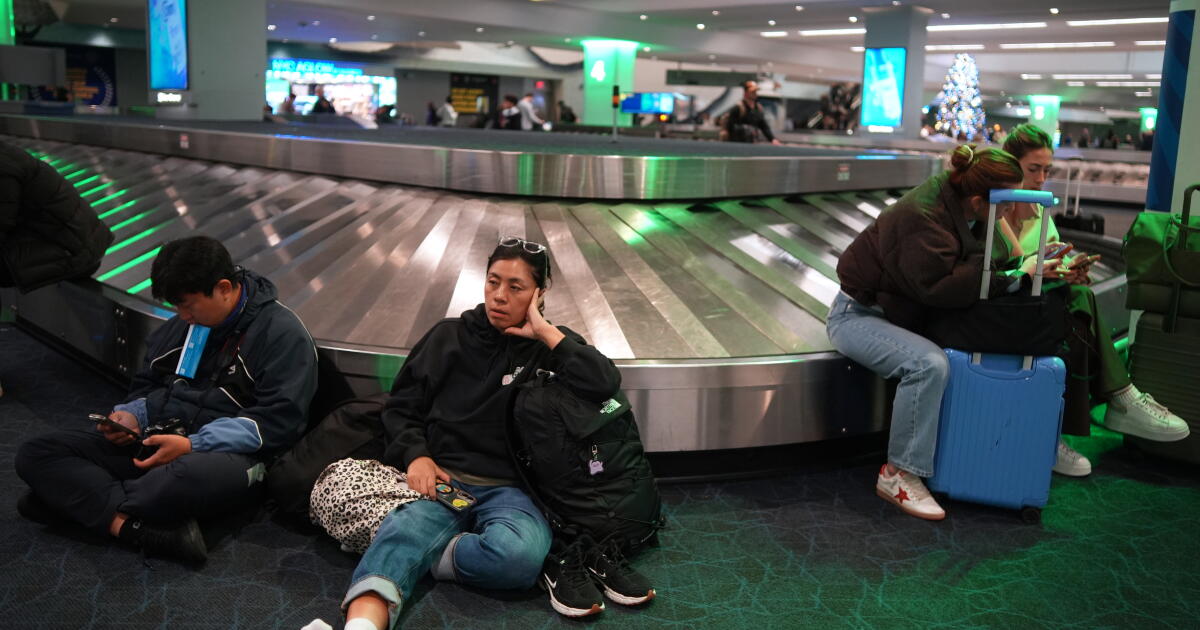
Thousands of flights across America were delayed, canceled or stuck on the tarmac Friday after the FAA announced a ground stop due to a communications issue with its air traffic control centers.
The sudden announcement left weary travelers scrambling and unsure about when they could make it to their destinations — and what sort of compensation they may be entitled to.
More than 10,000 flights within the United States were delayed and more than 5,000 were canceled as of 4:30 p.m. Friday, according to flight tracking website FlightAware.
Flights that already were in the air when the ground stop began were allowed to continue to their destinations, while all other domestic flights were held on the ground. International flights were being handled on a case-by-case basis, according to the Federal Aviation Administration.
The cause of the technical issue was unknown and there was no estimated time for resuming domestic flights Friday.
Homeland Security Secretary Markwayne Mullin said there was no reason to believe that the telecommunications outage was caused by a foreign or nefarious actor.
Under U.S. Department of Transportation regulations, all airlines at U.S. airports are required to allow passengers to deplane within three hours of a tarmac delay on domestic flights and within four hours on international flights. A tarmac delay applies to planes awaiting takeoff or planes that have just landed where passengers are unable to get off.
Airlines are generally required to provide water and snacks to passengers within two hours of a tarmac delay. Working toilets and comfortable air cabin temperatures must also be maintained and medical care must be provided if needed.
Opening of the article, excerpted from Los Angeles Times. To read the rest, open the article on the publisher's site.
MarketNews shows the headline and summary published by the outlet. The full article is on the publisher's website. (www.latimes.com)